Equipment
Leaks Under Storefront Units
- You See
- Drips at ceiling grids right below rooftop units.
- What It Means
- Curb flashing has cracked or was never tied in when the unit was swapped.

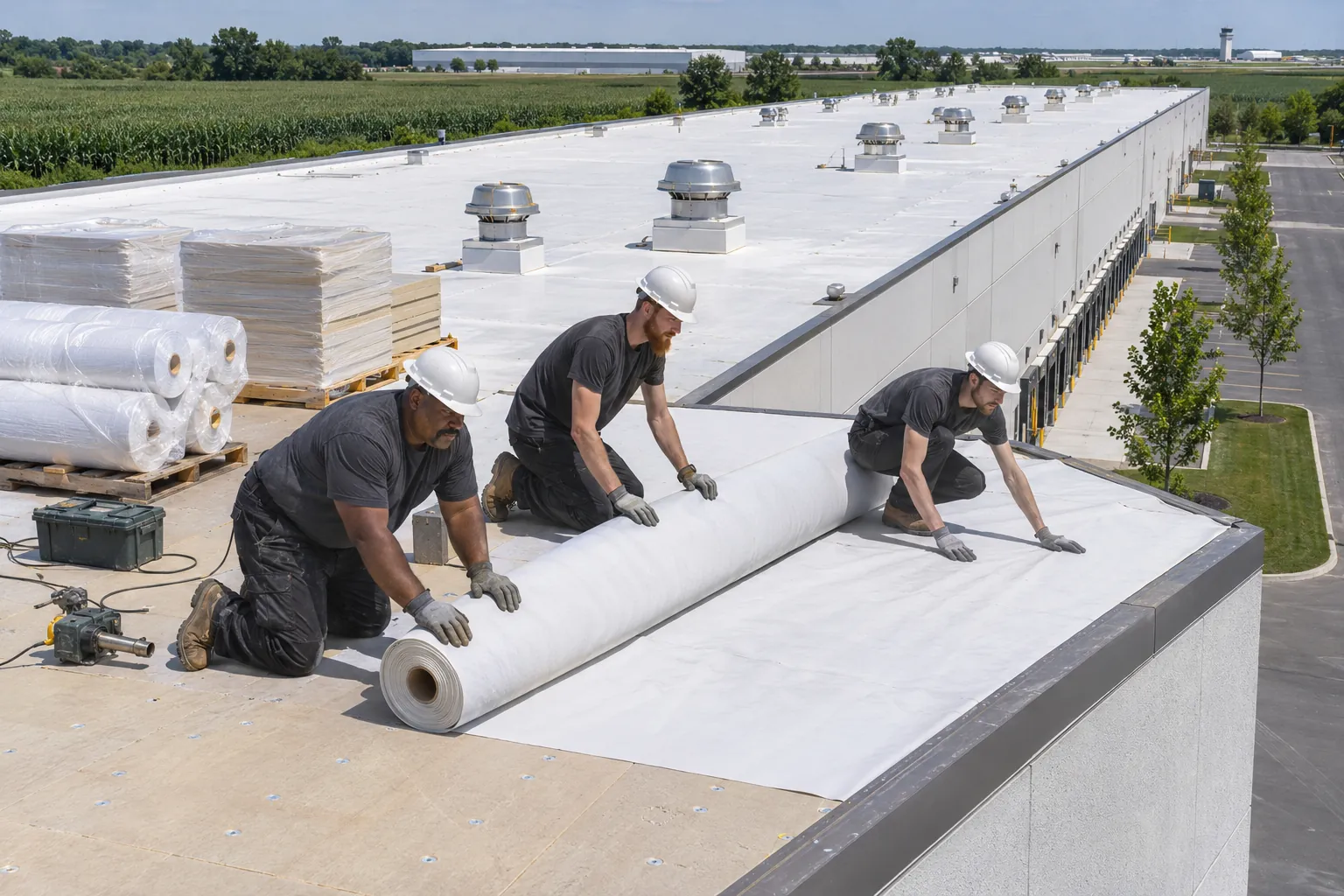
As an Avon commercial roofing contractor, we replace roofs on retail strips and office buildings, with new flashing at every rooftop unit while tenants stay open.
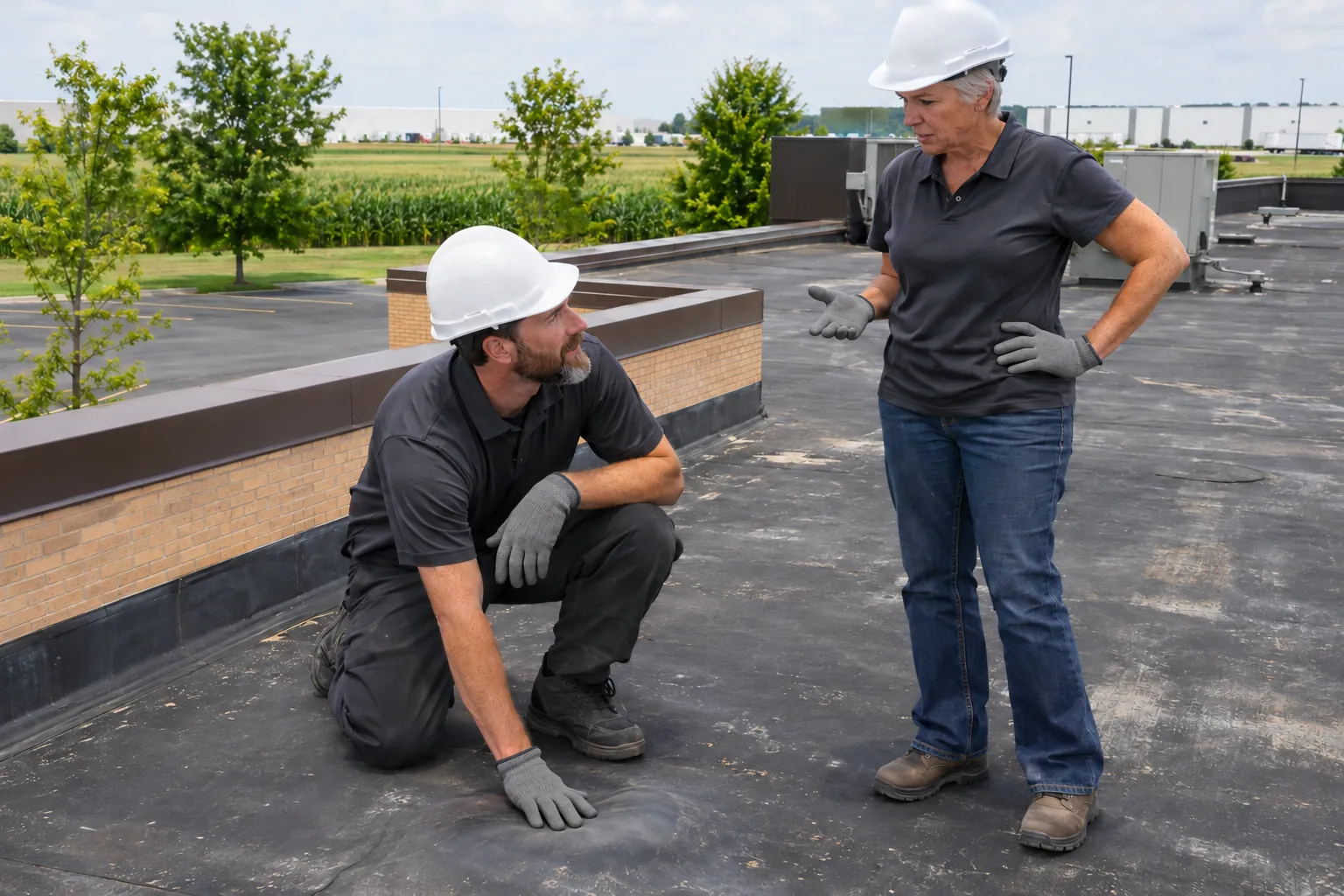
Avon commercial roofing on retail and office buildings means working around rows of HVAC units, each one a curb to flash and a path to protect.
Strip centers often carry one unit per storefront, plus exhaust for restaurants. Each curb is measured, raised where the new insulation calls for it, and wrapped with membrane flashing tied into the field.
Service techs walk these roofs all year, so walkway pads run from the hatch to every unit. We schedule around store hours and let managers know before a section over their space opens.
Retail and office roofs in town wear in these six spots first.
A new roof on a busy retail building fixes the leaks tenants notice first.
Each HVAC replacement left another patched curb.
All curbs get one consistent flashing detail tied into the new membrane.
Restaurant grease softens the sheet around fans.
Grease-resistant membrane and a catch at each fan keep the field intact.
Technician routes turn into puncture lines.
Walkway pads take the traffic on every route.
Loose coping lets wind under the storefront edge.
New edge metal and coping lock the membrane down along the parapet.
Retail, office, and service buildings in town take one of these four.

White welded sheets cut cooling load over stores and offices with many units, and the welded laps hold up around dense curb rows.
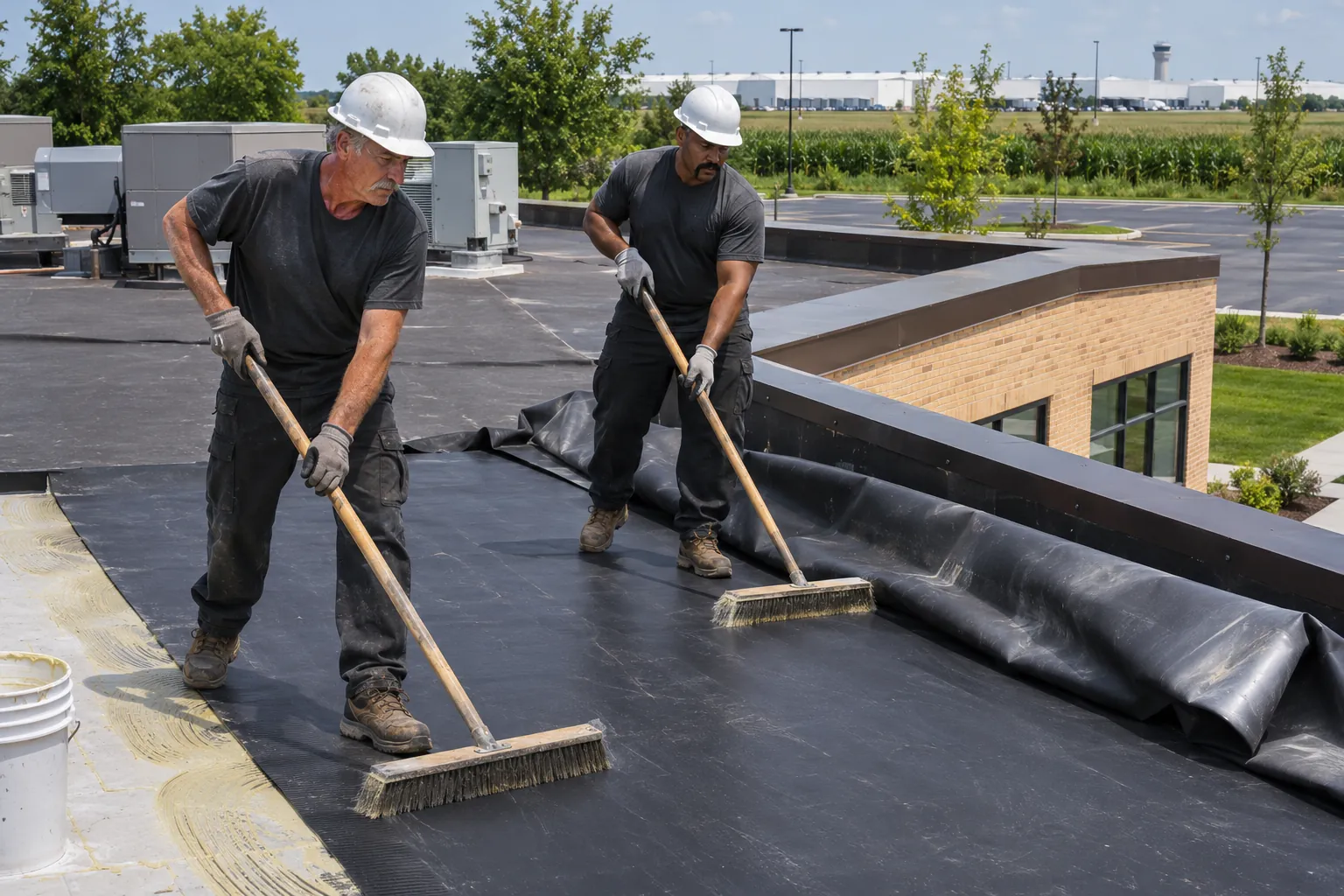
Rubber suits office buildings with walls, steps, and few units, flexing through winter where the roof meets the stair towers.
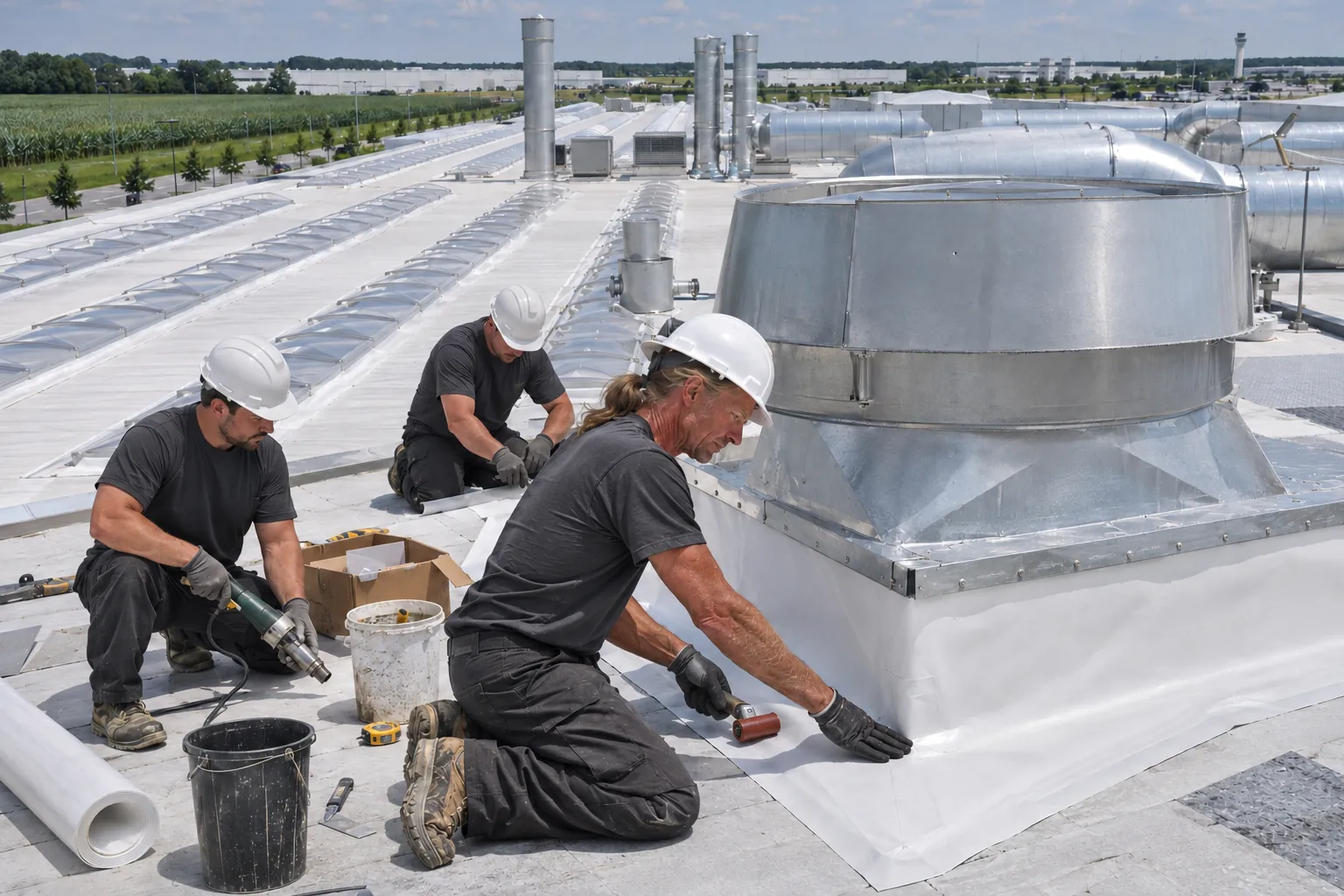
Service and light-industrial buildings with heavy exhaust need matched membrane, raised curbs, and pads along maintenance routes.
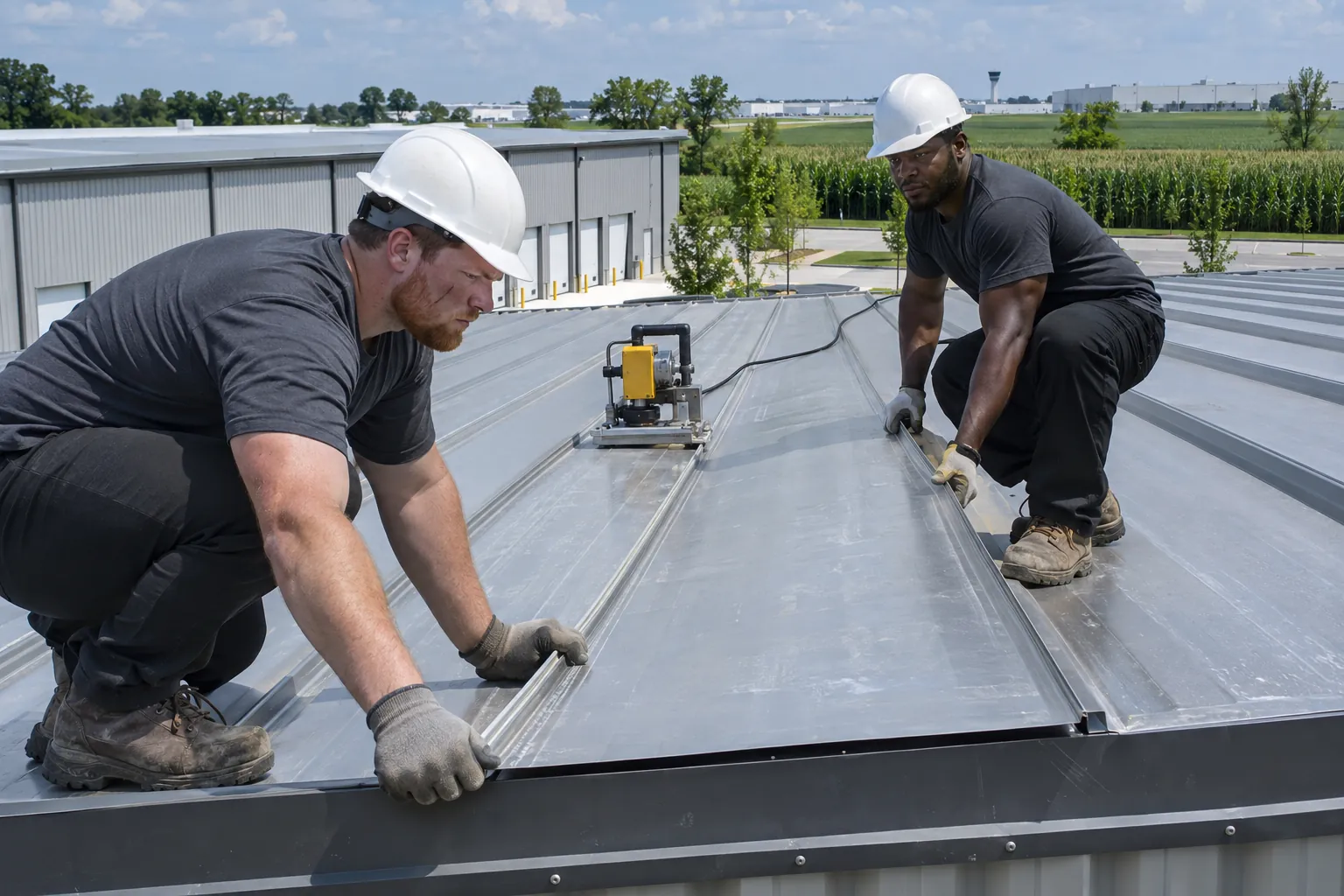
Metal covers pitched storefront canopies and shop buildings, shedding snow away from walkways when guards are set over doors.
Tell us which storefront and where the ceiling is wet, and we will trace it to the unit or lap above.
Call UsSend the address and the unit count, and we will plan around store hours.
Get A Free EstimateRetail jobs revolve around the rooftop units and the hours each store keeps.
Each unit is logged with its curb height, flashing condition, and any grease or exhaust around it, so the scope lists every curb by store.
Sections follow the stores below, timed with managers so noisy work misses peak hours.
The membrane goes down over new insulation, then every curb is wrapped, corner-patched, and tied in before that section closes for the night.
Walkway pads go in last along each route the techs use.
Buildings in these towns are in our area too. Elsewhere? Call us or send us a message.
Flex buildings and warehouses roofed bay by bay.
Brownsburg commercial roofing →Plant roofs replaced in sections over production.
Mooresville commercial roofing →Metal or membrane matched to each roof's slope.
Greencastle commercial roofing →What Avon store and office owners ask before a roof job.
Yes, replacements and new roofs on retail and office buildings in town. Roofs crowded with units get careful curb flashing and pads along service paths, and we work with property managers so tenants keep their doors open.
It covers tear-off or recover, new insulation, membrane, a reflashed curb at every unit, grease protection by kitchen fans, and walkway pads on service routes. Sections follow the storefronts below, so each store manager has notice, and noisy work over dining rooms or offices is timed away from their busiest hours.
Curbs move with unit vibration and get disturbed whenever a unit is swapped or serviced. Each swap tends to leave another patch, the patches pile up, and water finds the gaps at curb corners. A new roof resets every curb to one flashing detail tied into the field.
Stores stay open. Only the section over one or two storefronts is open at a time, with covers inside where stock or equipment is sensitive. That section gets its insulation, membrane, and curb flashing in one work window and is sealed before the crew leaves, so the next morning starts dry.
The structure sets that limit, and it was settled when the units went in. When an owner swaps a unit for a heavier one or adds a new curb, an engineer checks the framing first, and the new curb is flashed into the membrane at the same time so the roof stays one system.
Call or send the address, and we will map every unit and price the roof in writing.