Layers
Roof Edges Built Up Too High
- You See
- Edge metal sitting high above the wall and gaps at scuppers.
- What It Means
- Several roofs stacked on the deck; the next one has to start from bare deck.

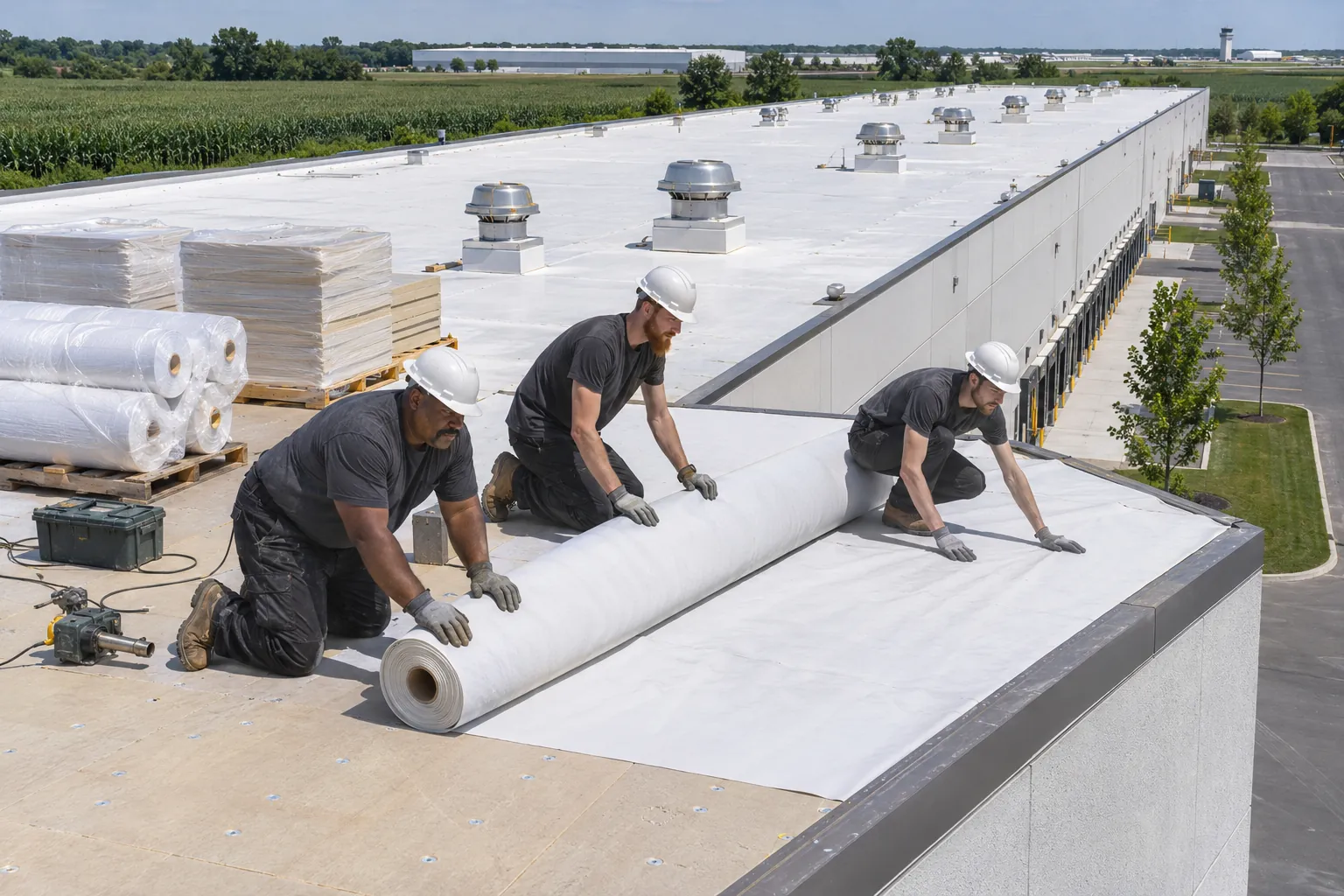
As a Danville commercial roofing contractor, we replace roofs on older offices, churches, and shops, starting with cores that show how many layers sit on the deck.
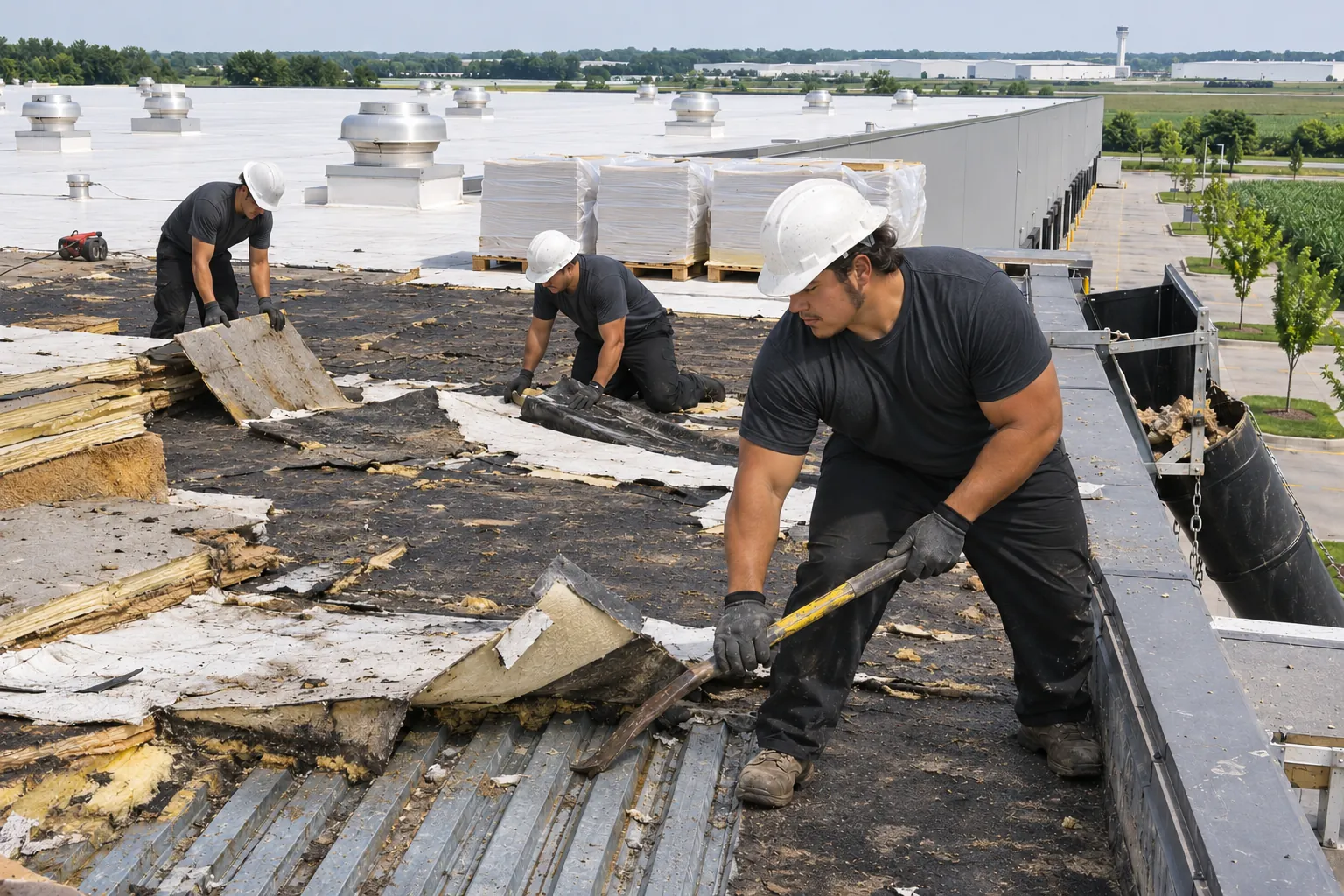
Danville commercial roofing on older buildings starts with a count. Many roofs here were covered more than once, and that history decides the plan.
Cores through the field show each layer, what it is made of, and whether it is wet. Code caps how many layers a roof can carry, so a stacked roof comes off to the deck before anything new goes on.
Old wood decks get checked from below and at the cores. Rotted boards are replaced during tear-off, and churches and offices are covered inside before each section opens.
Older roofs in town show their age in these six ways.
Starting fresh from the deck clears out decades of stacked problems.
Old roofs stacked together hold moisture that never dries.
Tear-off to the deck removes every wet layer before new insulation goes down.
Rotted boards sag and pond water over the years.
Damaged deck is replaced so the new roof sits flat and drains.
Brick walls let water behind old flashing.
New flashing wraps the parapet and ends under fresh coping.
Rusted outlets spill water down brick and rot the fascia.
New scuppers and gutters set at the new roof height carry water away.
Older buildings in town take these systems once the deck is ready.

Welded white sheets on larger flat offices and newer commercial buildings, fastened through new board once the old layers are off.
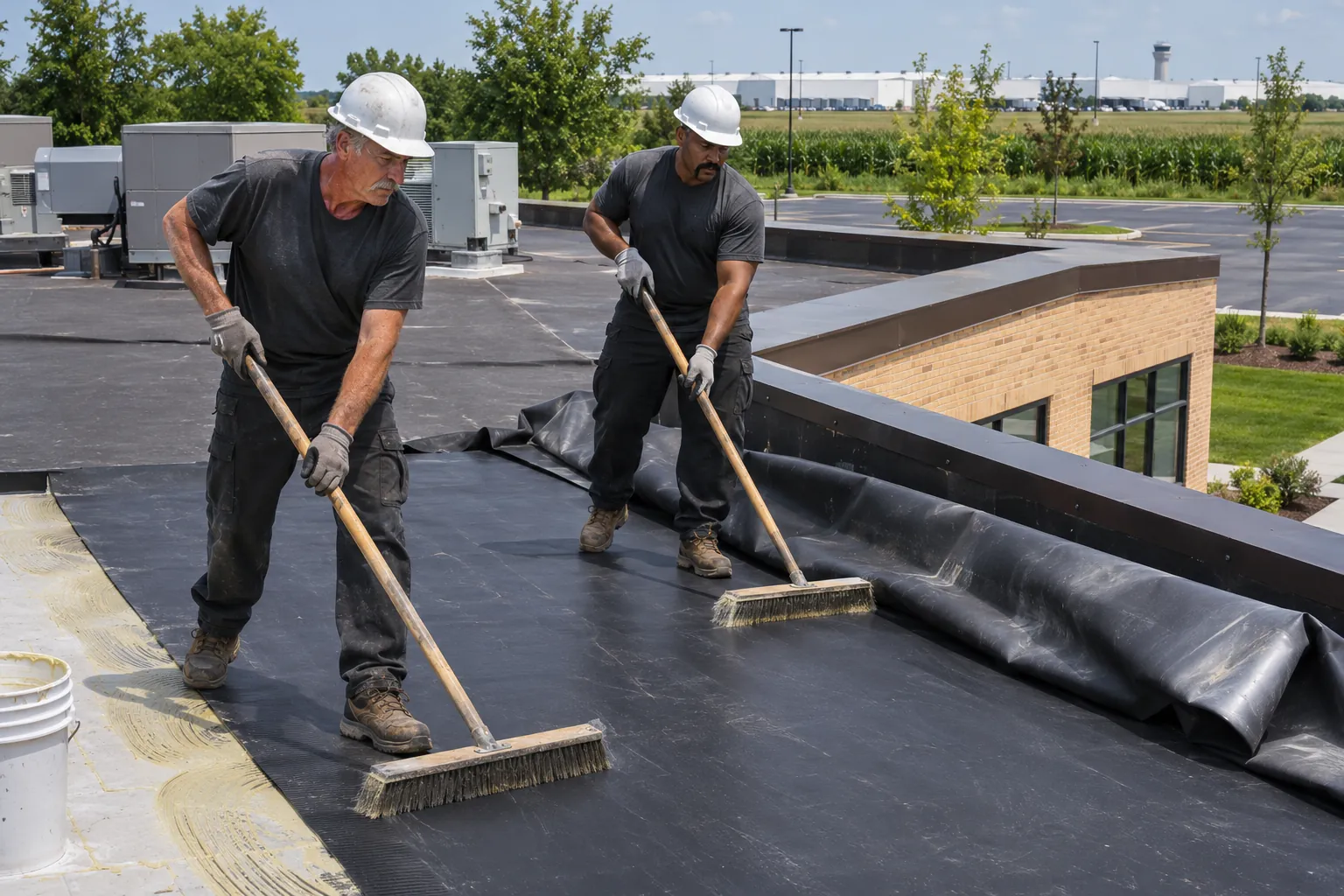
Rubber suits churches and older offices with many walls and steps, since it flexes where old brick and new roof move differently.
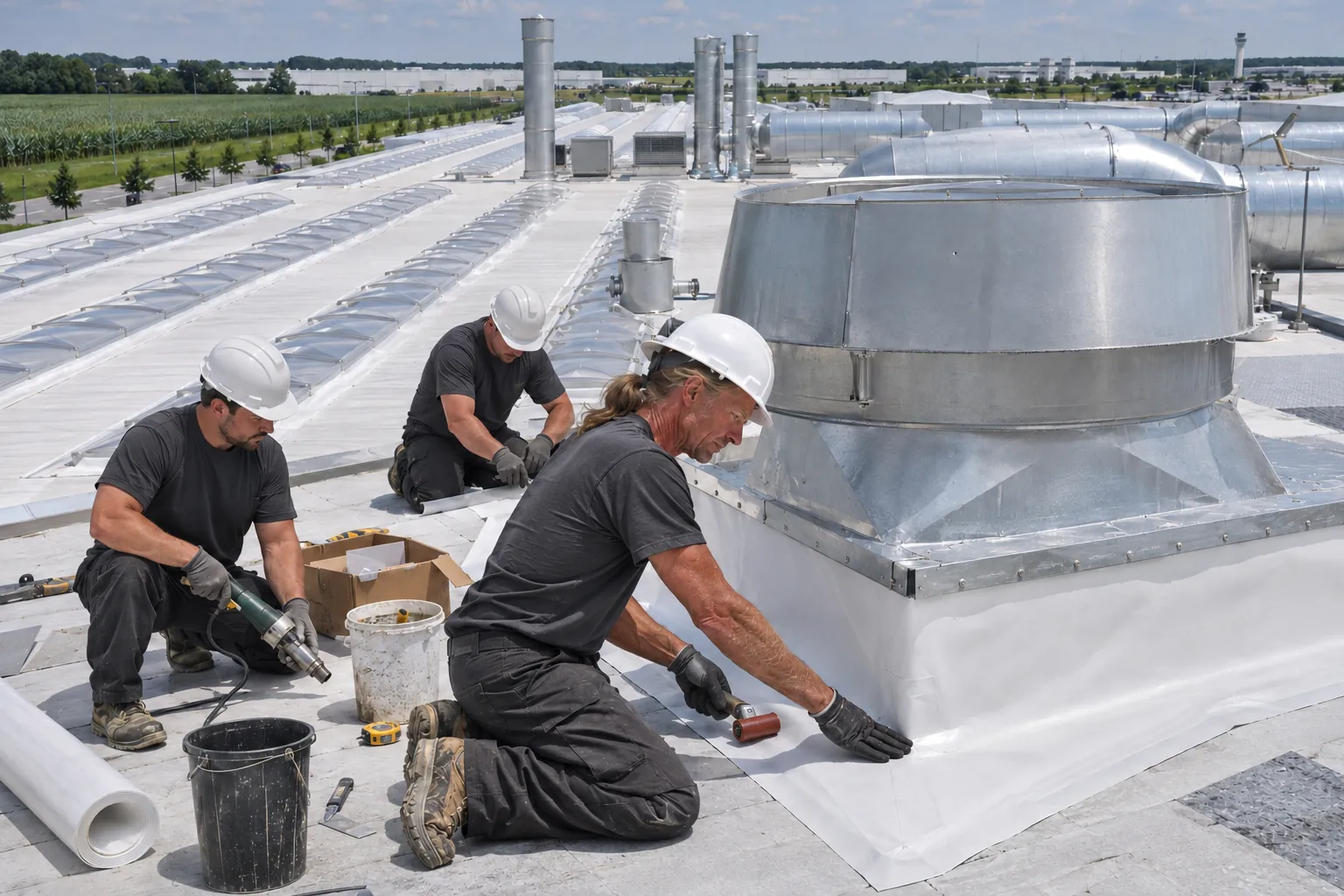
Shops and light plants with exhaust get matching membrane, raised curbs, and walkway pads to every unit.
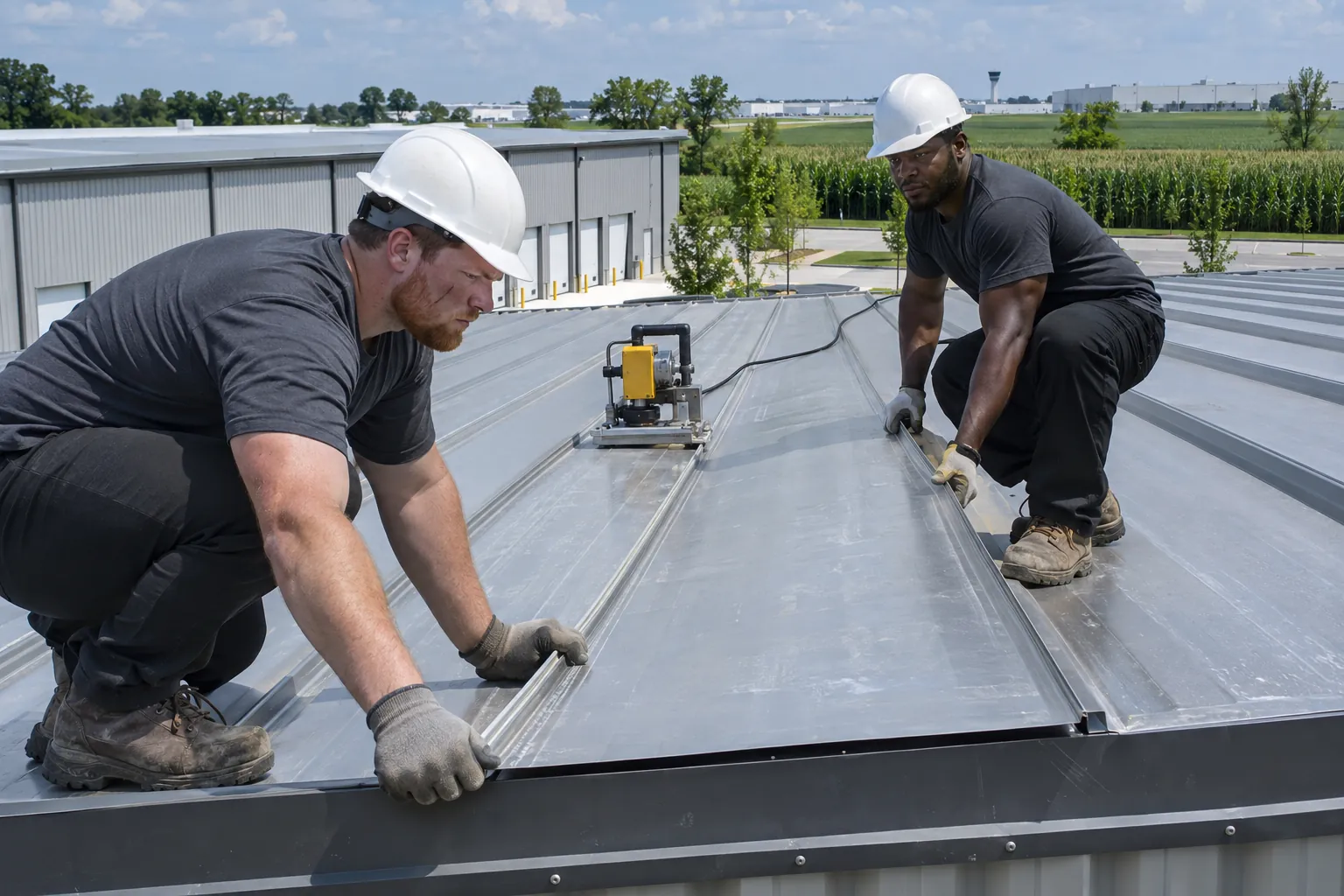
Metal panels fit pitched church and shop roofs, with snow guards set over entrances and walkways.
Tell us which room and what is above it, and we will check the layers and flashing there.
Call UsSend the address, and we will core the roof and count the layers before pricing.
Get A Free EstimateOlder roofs get a slower first look, because the history matters.
Cores at several spots show what each layer is, which ones are wet, and how many sit on the deck.
The deck is checked from below and at the cores for rot, sag, and fastener hold, and soft areas are marked on the roof plan for the scope.
Old layers come off a section at a time, with damaged boards replaced before insulation goes down.
New membrane or panels go on, with parapets flashed and coped before that section closes.
We work in the towns below as well. If your building is elsewhere, call us or send us a message.
Flex buildings and warehouses roofed bay by bay.
Brownsburg commercial roofing →Plant roofs replaced in sections over production.
Mooresville commercial roofing →Metal or membrane matched to each roof's slope.
Greencastle commercial roofing →What owners of older Danville buildings ask us.
We roof offices, churches, shops, and light industrial buildings in town. Older buildings often carry several layers, so we check underneath before deciding whether a recover is possible, then choose TPO, EPDM, or metal for that roof.
The building code limits recovers, so a roof that already has its maximum number of layers gets torn off to the deck. Your local building office can confirm the rule for your building. Cores at several spots tell us exactly what you have, layer by layer, before anyone prices a recover.
Expect cores, a deck check from below, tear-off in sections, repair of soft boards, new insulation, membrane or metal, and new parapet flashing with coping. Interior covers protect rooms below each open section, and older scuppers and gutters are rebuilt so water leaves the new roof cleanly.
Work avoids services, weddings, and funerals, with sanctuary areas covered inside before the section above opens. Steep sections over the sanctuary usually take metal panels with snow guards over entrances; low roofs over halls and classrooms take membrane. The church gets a calendar of which roof is open each week.
Rotted boards are cut out and replaced during tear-off, before insulation goes back down. The scope lists a per-board allowance, so deck work is priced before it starts, and you see the damaged sections before they are covered. Sagging spans get checked for the joist below too.
Call or send the address, and we will count the layers and price the roof in writing.