Exhaust
Soft Membrane Around Fans
- You See
- Tacky or swollen roofing near process exhaust.
- What It Means
- Vented oils attack the sheet; resistant membrane goes in those zones.

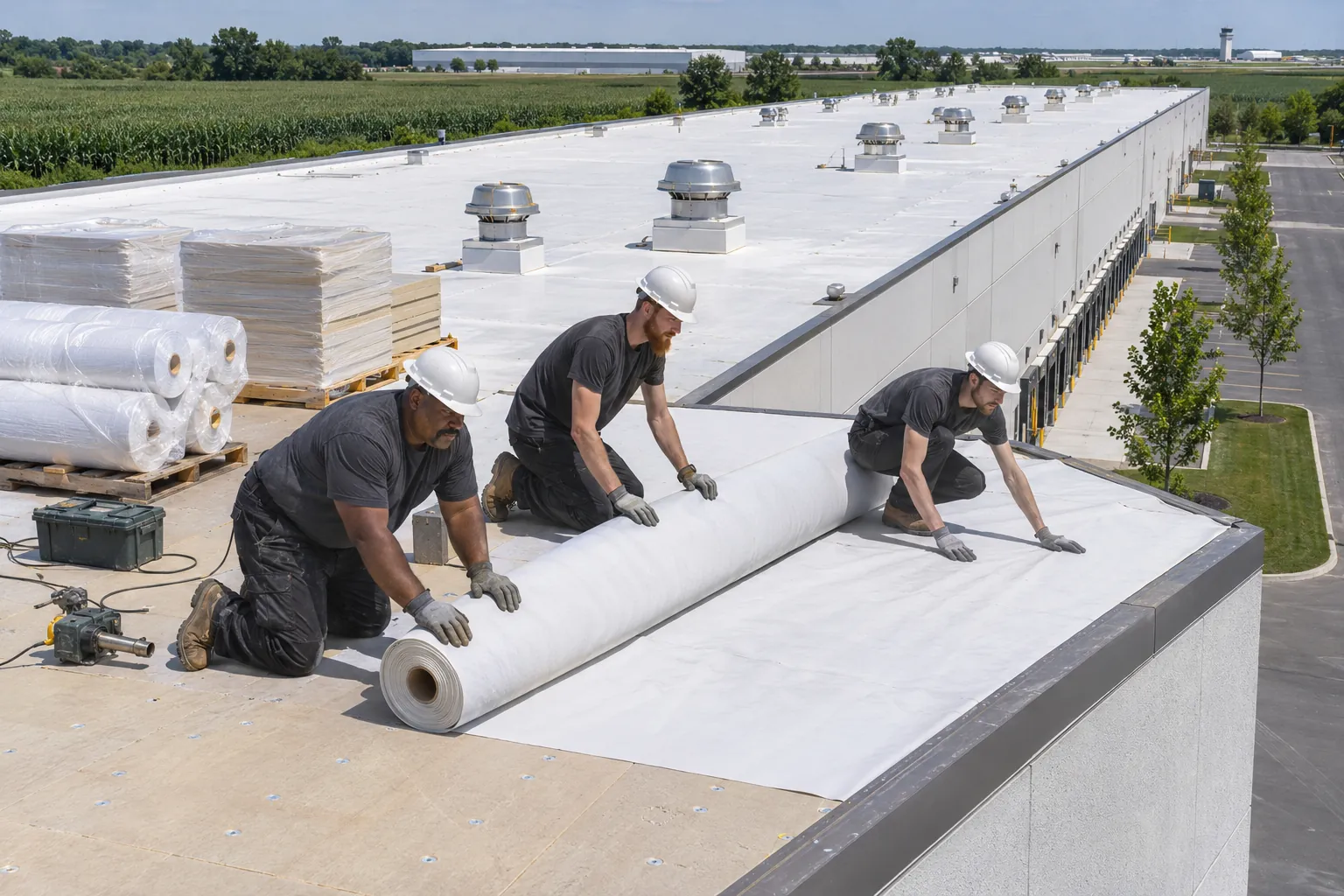
As a Mooresville commercial roofing contractor, we replace plant and manufacturing roofs in sections, with machinery covered below and work timed with plant safety staff.
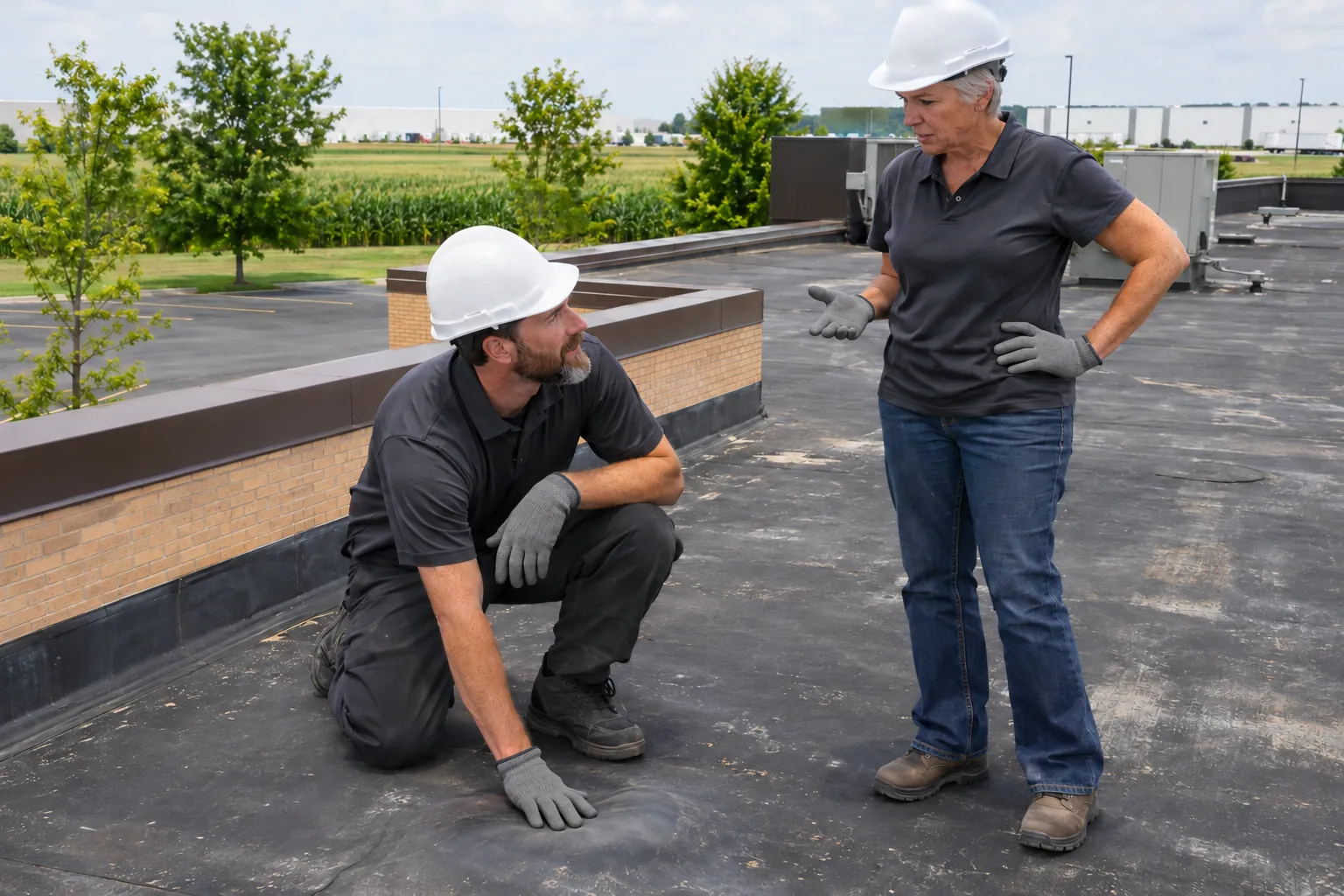
Mooresville commercial roofing on plants means the line keeps running under the roof we replace, so every section is planned around what sits below.
Before any roof opens, each section is matched to the floor beneath it: machinery, stored product, and walkways. Covers go up inside, and noisy or dusty work is booked for shift changes or down days.
Exhaust fans and process curbs get mapped first, since they decide which membrane goes on and how each penetration is flashed.
Plant roofs in town wear out in these six spots first.
A new plant roof stops leaks that shut down lines and spoil product.
Oils and heat break down the roof near process exhaust.
Resistant membrane, protection pads, and heat-rated flashing hold up where the plant vents, so the field around each fan stays firm.
Water reaching controls and product forces stoppages.
Fresh membrane, curb flashing, and dry insulation across the section end those interruptions, and floor covers protect the line while the roof is open.
Constant trips to units wear holes in the sheet.
Pads on every route carry the traffic instead of the membrane, from the roof hatch out to the farthest fan.
Short curbs leave flashing too low once insulation is added.
Curbs are raised so flashing reaches the height the system needs.
Plant campuses usually use more than one of these systems.
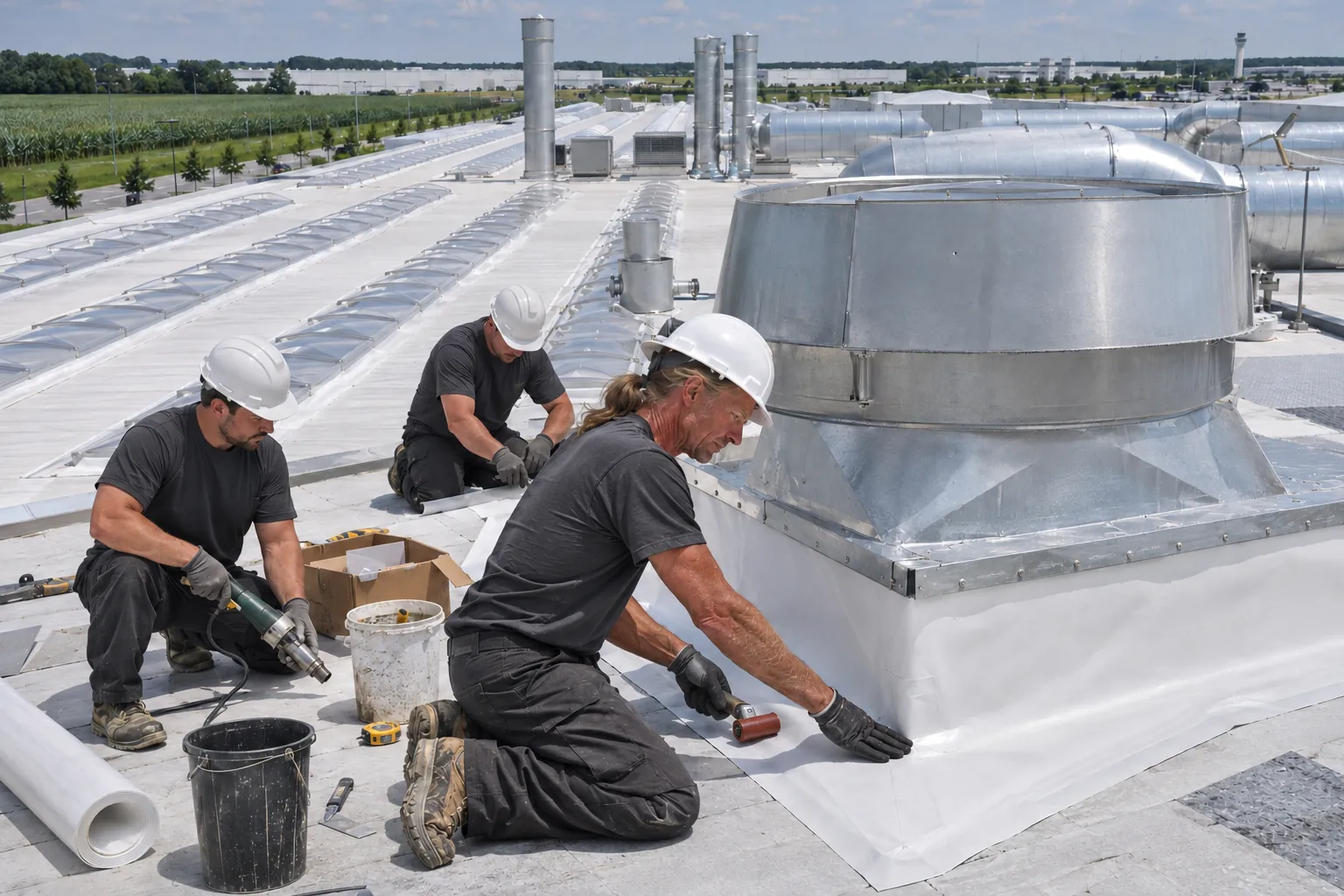
Production roofs with exhaust and heavy units get membrane and pads matched to the process, plus heat-rated flashing at stacks.
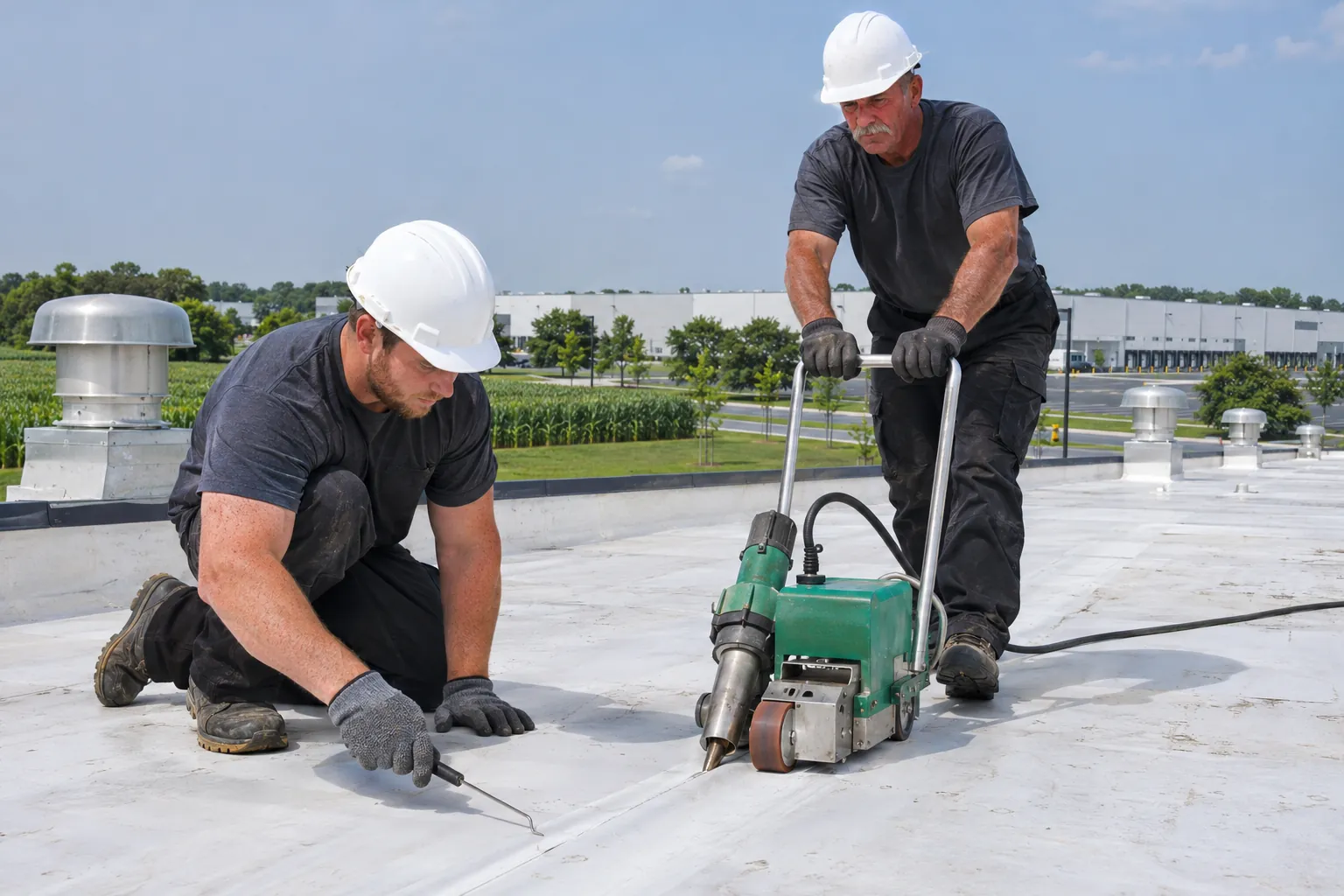
Shipping and storage wings take welded white TPO over steel deck, with tapered board where water sits by the docks.
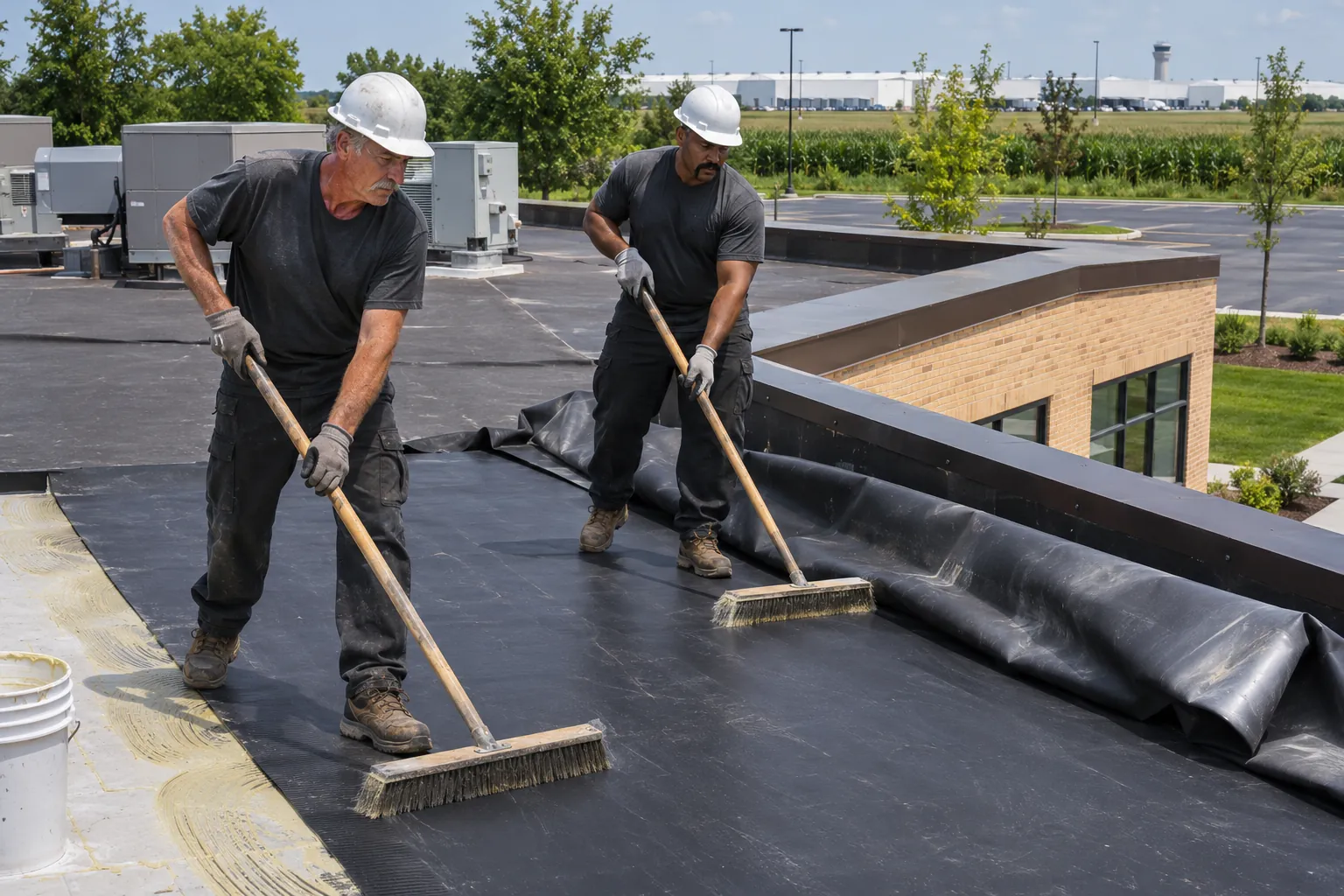
Office wings with walls and steps take flexible rubber sheets with taped laps and new wall flashing.
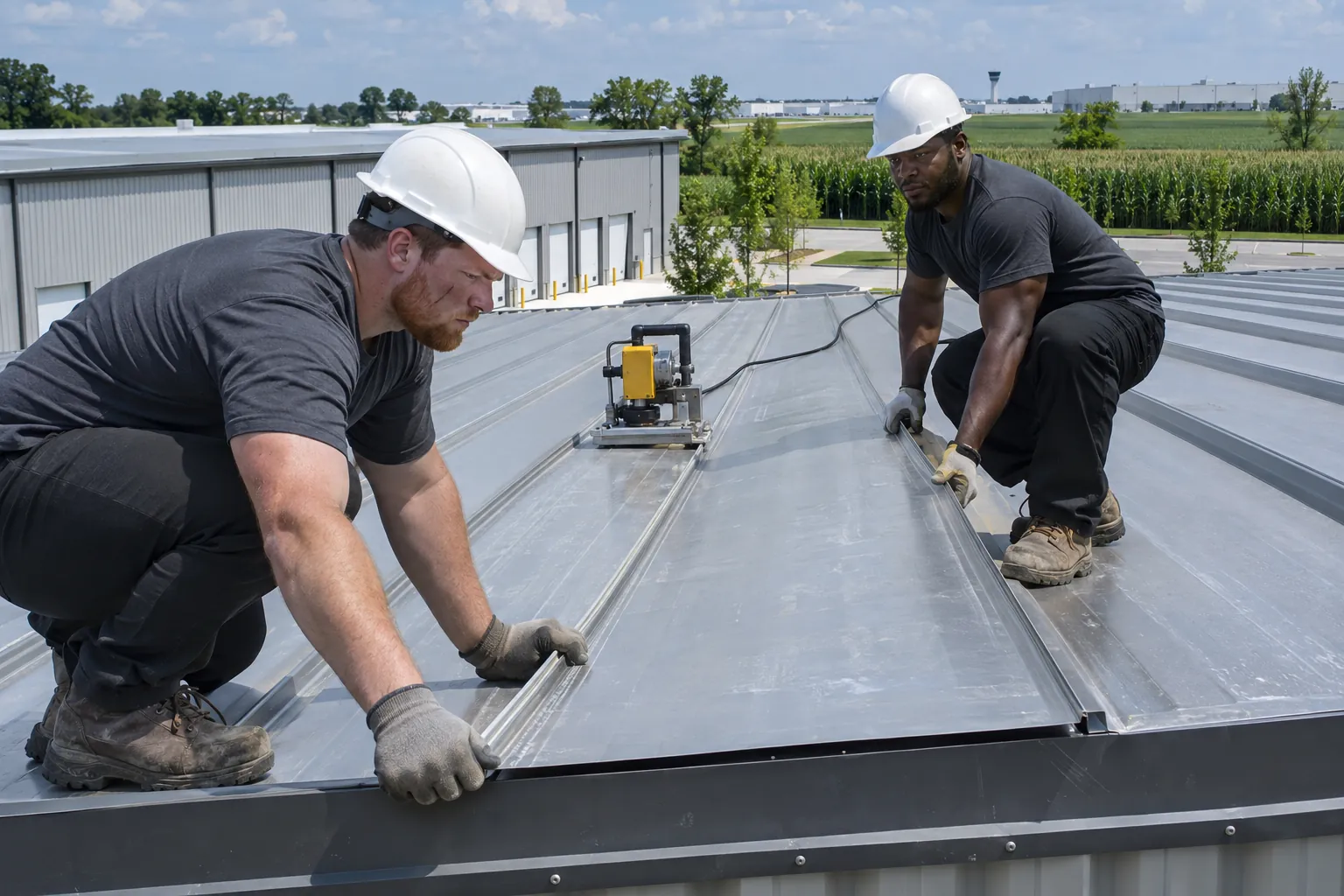
Pitched warehouses and sheds on the campus take metal panels, often standing seam with hidden clips.
Tell us which bay and what equipment sits below, and we will seal the source first, then look at the roof section around it.
Call UsSend the address, and we will map exhaust, units, and sections before pricing.
Get A Free EstimatePlant roof work follows the production schedule and the safety rules on the floor.
Each roof section is paired with the machinery, product, and walkways beneath it, so covers, timing, and lift spots fit what runs below.
Hot work, crane lifts, and dusty tear-off get scheduled through the plant safety process.
A section opens only when its covers are in place, then gets insulation, membrane, and flashing in one window.
Walkway pads go on along the maintenance routes, the floor covers come down, and the section is handed back to production with a short closeout note.
We take roof work in these towns too. For a building elsewhere, call us or send us a message.
Flex buildings and warehouses roofed bay by bay.
Brownsburg commercial roofing →Metal or membrane matched to each roof's slope.
Greencastle commercial roofing →What plant managers in Mooresville ask about roof work.
Industrial and manufacturing buildings in town get TPO, EPDM, or metal roofs from us. Plant roofs go on in sections with production areas protected below, and flashing is planned around exhaust fans and process equipment, where the wear concentrates.
The roof is divided to match the floor below, line by line or bay by bay. Each section gets covers inside, then opens, receives new insulation, membrane, curb flashing, and pads, and closes before the crew moves on. Production next to the open section keeps running the whole time.
The membrane near each fan has to handle what it vents. Oily or greasy exhaust gets a resistant sheet or sacrificial protection pads, curbs are raised and flashed to the new insulation height, and hot stacks get flashing rated for their temperature, since ordinary details scorch and crack there.
Hot work permits, crane lifts, product protection, and shift timing all join the plan, along with heat-rated flashing at process stacks and resistant membrane near exhaust. Dusty tear-off over open lines is booked for down days, and each section has a named plant contact for the day it opens.
The plant safety contact runs it. We work through that person, following its permit and lockout rules, and book hot work, lifts, and roof access with that person before each section opens.
Call or send the plant address, and we will plan the sections around your production.