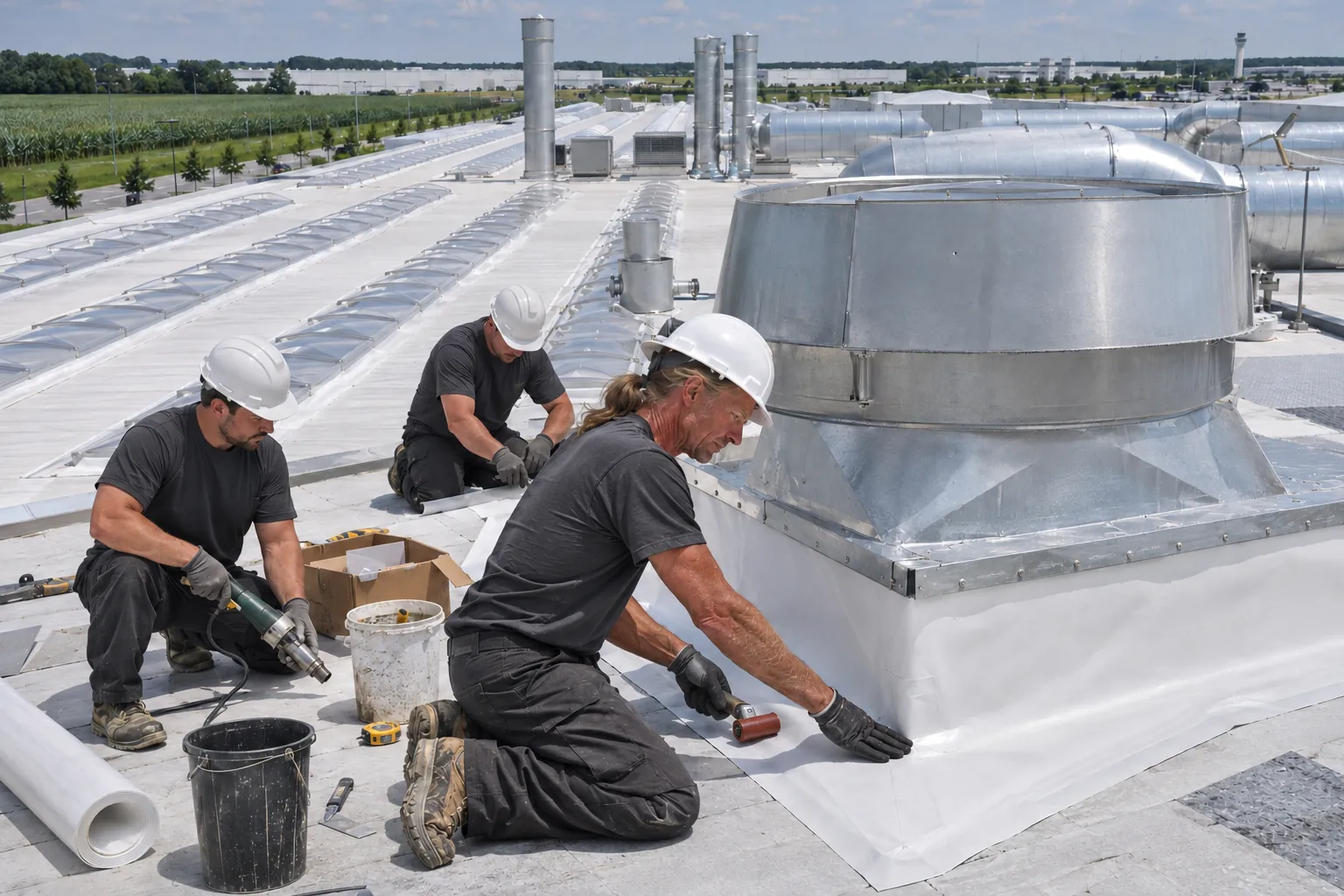
Roofer flashing membrane around a rooftop equipment curb on an industrial plant roof

Plainfield Industrial Roofing Contractor

Plant Roofs Built Around Exhaust, Heavy Units, And Daily Service Traffic

As a Plainfield industrial roofing contractor, we install and replace roofs on plants and distribution centers in sections, while production and shipping keep running below.

  • Plants And Distribution Centers
  • Curb And Exhaust Flashing
  • Walkway Pads To Each Unit
  • Phased Around Production

Is This Plant Ready For Plainfield Industrial Roofing?

Plainfield industrial roofing starts with what the building puts out. The cards compare plants ready for a new roof with ones needing other work first.

Go Ahead

Ready For A New Roof

Roof Load
Units and fans on curbs with room to flash
Exhaust
Exhaust mapped and matched to the membrane
Operations
Production areas that can be covered in sections
Access
Lift or crane space away from the truck court
Timing
Work windows agreed with plant safety staff
Before Roofing

Sort Out First

Roof Load
Equipment sitting directly on the old membrane
Exhaust
Grease build-up around fans with no catch plan
Operations
Open process areas with nothing to protect them
Access
Every side blocked by docks or rail
Timing
Hot work with no permit process in place

Roof Problems Behind Industrial Roofing In Plainfield

Plant roofs wear out in a few predictable places.

Exhaust

Membrane Softening Near Fans

You See
Dark, swollen rubber or tacky patches around exhaust stacks.
What It Means
Oils in the exhaust attack the sheet; a resistant membrane or protection is needed there.
Equipment

Cracked Curb Flashing

You See
Leaks below rooftop units and gaps at curb corners.
What It Means
Vibration and heat age curb flashing fastest; each curb gets new, taller flashing.
Foot Traffic

Worn Tracks Between Units

You See
Scuffed membrane and dropped screws along service routes.
What It Means
Technician paths need walkway pads laid from the hatch to every unit.
Heat

Scorched Areas At Hot Stacks

You See
Blistered or brittle roofing around process vents.
What It Means
High-heat penetrations need flashing details rated for the temperature.
Moisture

Soft Roof Over Process Areas

You See
Membrane that gives underfoot over warm, humid rooms.
What It Means
Condensation and leaks soaked the insulation; cores map the wet area for replacement.
Drainage

Water Pooled Behind Equipment

You See
Standing water on the upslope side of large units.
What It Means
Equipment blocks flow; crickets behind curbs steer water to drains.

Industrial Roofing Options For Plainfield Plants

Plant roofs mix systems and details. These rows show what goes where on a typical job.

Roof AreaSystem Or DetailWhy It Goes ThereCheck First
Main FieldTPO or EPDM over new insulationCovers the large open roof fastCores for wet insulation
Around Exhaust FansOil-resistant sheet or protection padsExhaust residue attacks some membranesWhat the process vents
Service RoutesWalkway pads welded or adheredStops punctures from boots and toolsWhere technicians walk
Process PenetrationsHigh-heat flashing detailsOrdinary flashing scorches at hot stacksStack temperatures

What New Industrial Roofing Changes For Plainfield Plants

A plant roof is replaced to stop the problems that interrupt production.

Failure Mode

Exhaust Eating The Membrane

Residue from fans softens the sheet until it splits.

What The New Roof Does

Resistant membrane and protection at each fan hold up to what the plant vents.

Failure Mode

Punctures From Service Work

Tools, screws, and boots open small holes that leak into production.

What The New Roof Does

Walkway pads mark the routes and take the wear the membrane used to take.

Failure Mode

Leaks Under Heavy Units

Old curbs sit too low and their flashing cracks.

What The New Roof Does

Curbs are raised where needed and flashed to the height the system calls for.

Water Getting Into Production?

Leaking Now?

A leak over machinery or packed product needs a temporary seal fast. Call and tell us which bay it is in.

Call Us

Planning A Plant Roof?

Send the address, and we will map units and exhaust and write a phased scope.

Get A Free Estimate

How Industrial Roofing Runs At Plainfield Plants

Plant roofs go on in sections, scheduled with the people who run the floor below.

Inspection Sheet

Plant Roof Checklist

  • Every fan and what it vents
  • Curb heights and flashing
  • Service routes to units
  • Lift and crane locations
  • Cores across the field
  1. Map Equipment And Exhaust

    Each fan, stack, and unit is logged with what it vents, so the membrane and flashing match the process.

  2. Plan Sections With Plant Staff

    Work windows, hot work permits, and crane lifts are set with safety staff before any roof is opened.

  3. Protect The Floor Below

    Areas under open roof get covers so debris and dust stay off product and machinery.

  4. Install, Flash, And Pad

    Sections are roofed, flashed at every curb, padded on service routes, and closed in the same window.

More Commercial Roof Systems

Plant buildings often have offices or warehouses attached. These systems cover those roofs.

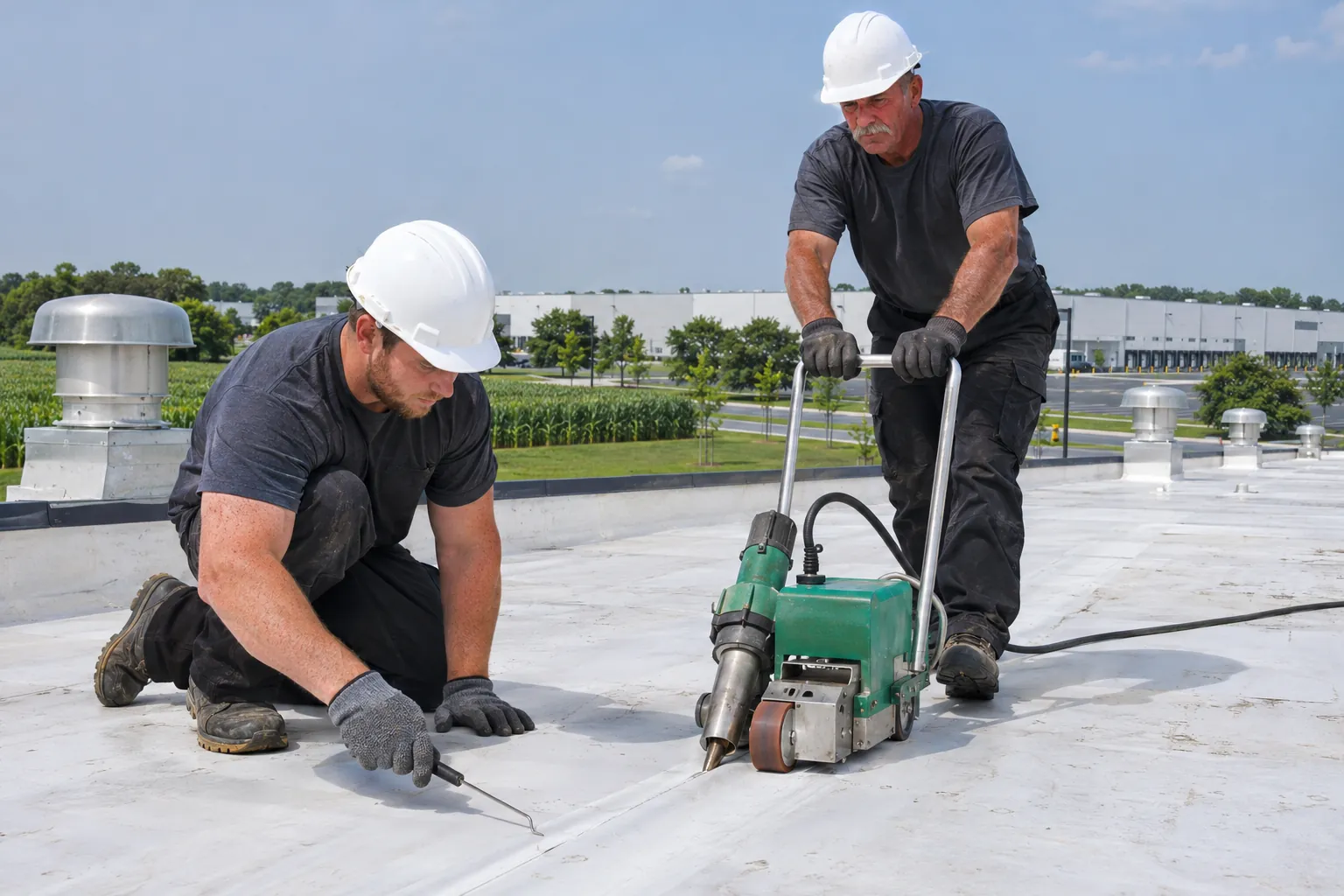
Roofer probing a TPO seam beside an automatic heat welder on a warehouse roof

TPO Roofing

Attached warehouses and shipping wings take welded white TPO, fast to install over a steel deck.

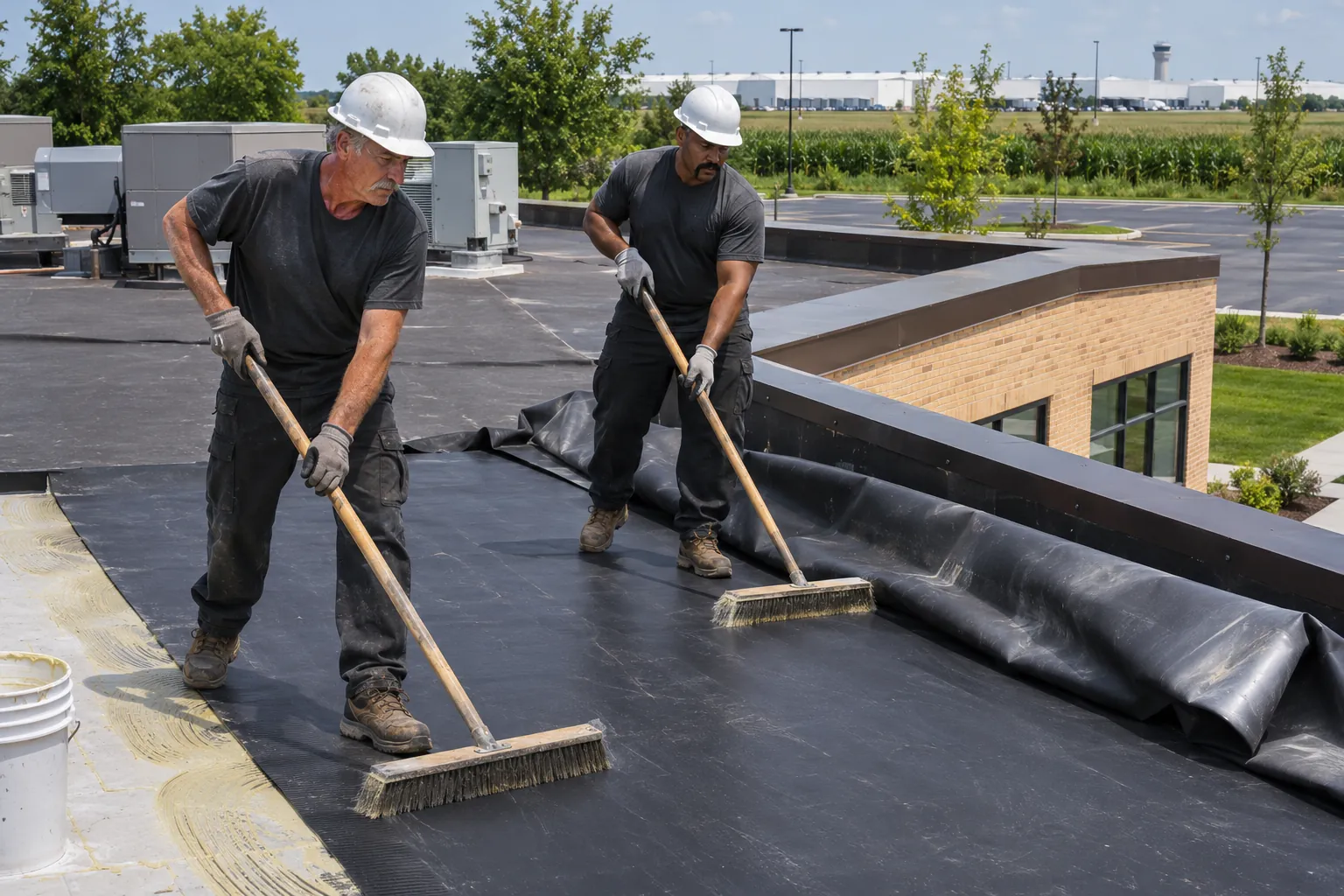
Roofers brooming a black EPDM membrane down on a low-slope commercial roof

EPDM Roofing

Office wings with walls and steps take rubber sheets that flex through winter movement.

Industrial Roofing Questions From Plainfield Plants

What plant managers ask before a roof project.

The Work

What is industrial roofing for Plainfield facilities?

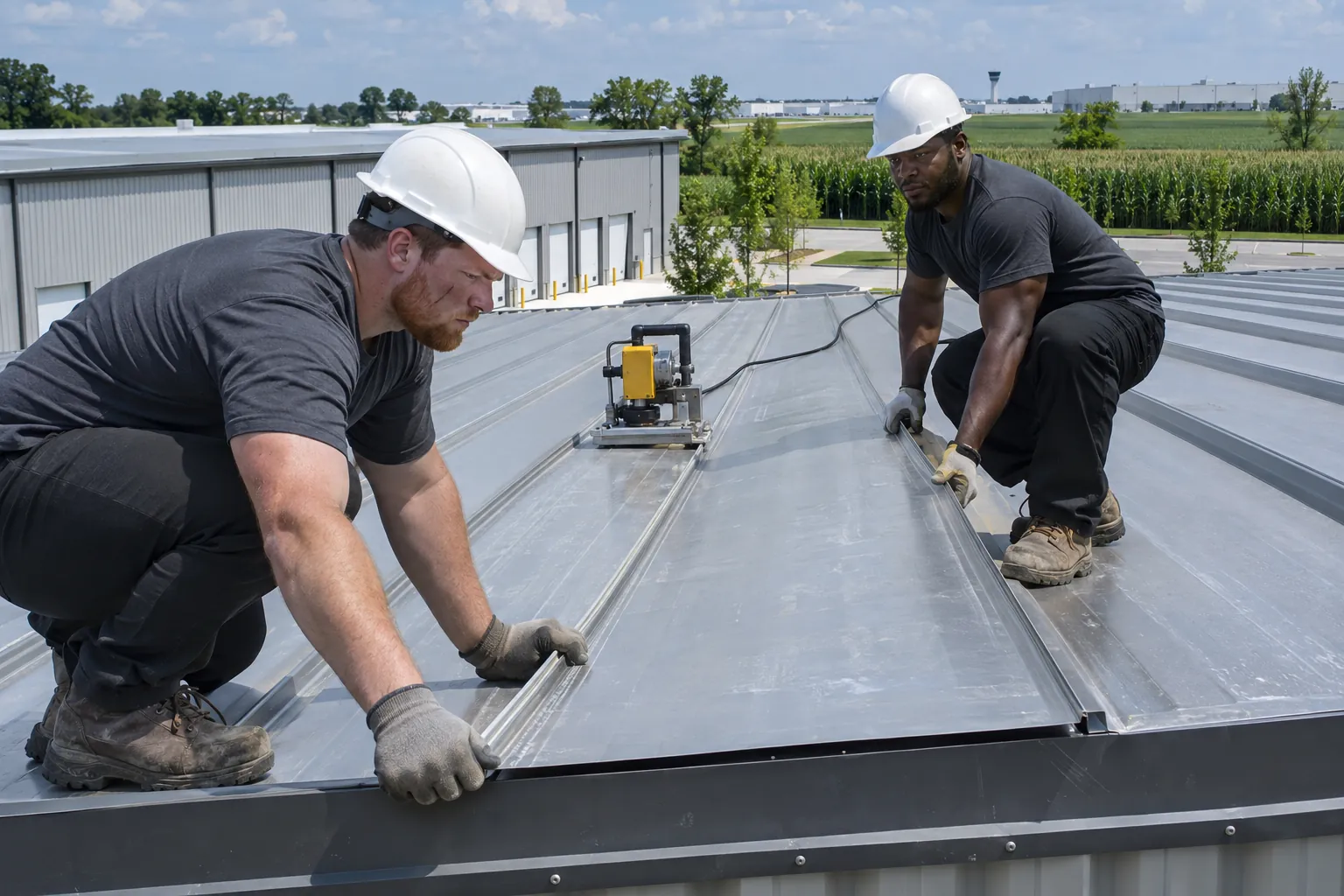
Industrial roofing covers factories, distribution centers, and other heavy-use buildings, usually with large low-slope roofs carrying heavy equipment. Those roofs face heat, oils, chemical exhaust, and constant service traffic, so TPO, EPDM, or metal is chosen to match what the building produces and how people use the roof.

How are roofs installed on Plainfield manufacturing plants?

Roofing goes on in sections, each opened and closed in one work window. Machinery and product below are covered, and hot work and crane lifts are booked with plant safety staff. Exhaust fans and process penetrations are mapped first so flashing fits what the plant puts out.

Cost And Pads

What determines industrial roofing cost in Plainfield?

Roof size, the system, insulation, tear-off or recover, equipment that has to be lifted or worked around, the penetration count, and phasing to keep production running all drive the price. Safety steps such as hot work permits add labor. Each plant is priced after a free visit.

Why do industrial roofs in Plainfield need walkway pads?

Pads protect the membrane along routes technicians use to reach units and fans. Dropped screws, tools, and steady foot traffic otherwise punch and wear holes, one of the most common leak sources on plant roofs. Pads run from each access point to every unit on install or repair.

Operations

How do Plainfield distribution centers keep operating during a roof project?

Sections are opened and closed within one work window so the building stays dry. Lifts and staging are planned around truck courts and dock schedules, sensitive inventory areas are done in quiet hours, and debris is contained on the roof well away from dock traffic.

Hire A Plainfield Industrial Roofing Contractor

Call or send the plant address, and we will map the roof and write a phased scope.

Call (463) 288-8723