Age
Open Laps Over Tenant Spaces
- You See
- Stains in one suite while the bay next door stays dry.
- What It Means
- A single failed lap leaks into one tenant; the rest of the field tells us if more are going.

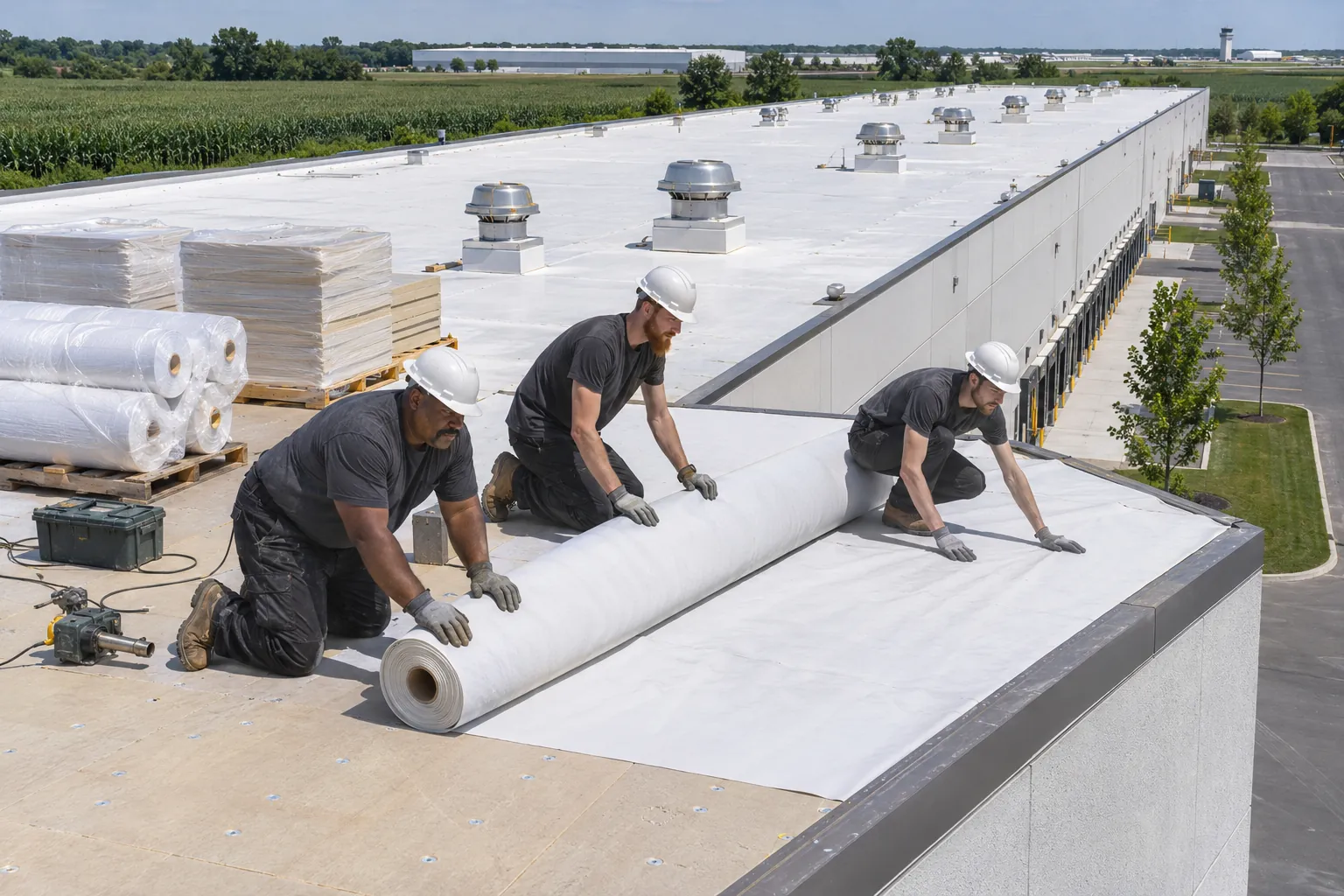
As a Brownsburg commercial roofing contractor, we replace TPO, EPDM, and metal roofs on flex buildings and warehouses that stay open while the work goes on.
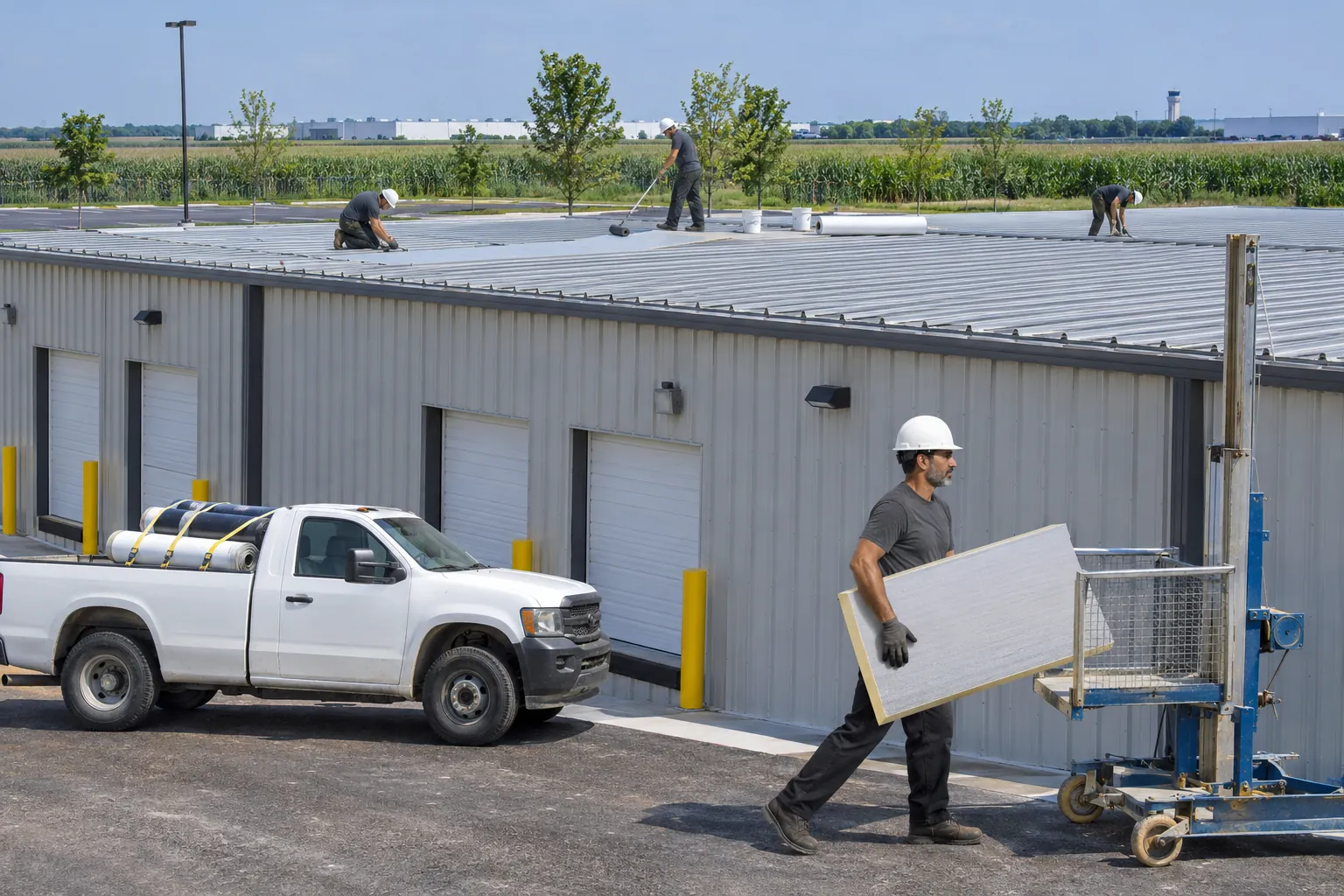
Most Brownsburg commercial roofing jobs we see sit over businesses that never close. The roof gets split into bays that match the tenant spaces below.
Each bay is torn off or recovered, insulated, and sealed inside one work window, so a tenant never goes a night under open roof. Loud work over offices is pushed early, and lifts set down away from customer doors.
Core cuts come first. A dry single layer can take a recover with a cover board, which cuts noise and dumpster trips; a wet or doubled roof comes off to the deck.
Flex and warehouse roofs in town tend to show these six conditions.
A new roof on a multi-tenant building fixes problems one bay at a time.
A lap failure over one suite turns into complaints, ceiling tiles, and lost stock.
Fresh seams across every bay end the patch-by-complaint cycle.
Flat runs between demising walls trap water after storms.
Crickets and tapered board send water to drains clear of the walls.
Curbs added over the years carry every kind of patch.
All curbs are reflashed to one detail tied into the new membrane.
Long flat runs hold rain against the seams between storms.
Tapered insulation builds slope toward each drain across the bay.
These four systems cover the flex, warehouse, and office roofs in town.
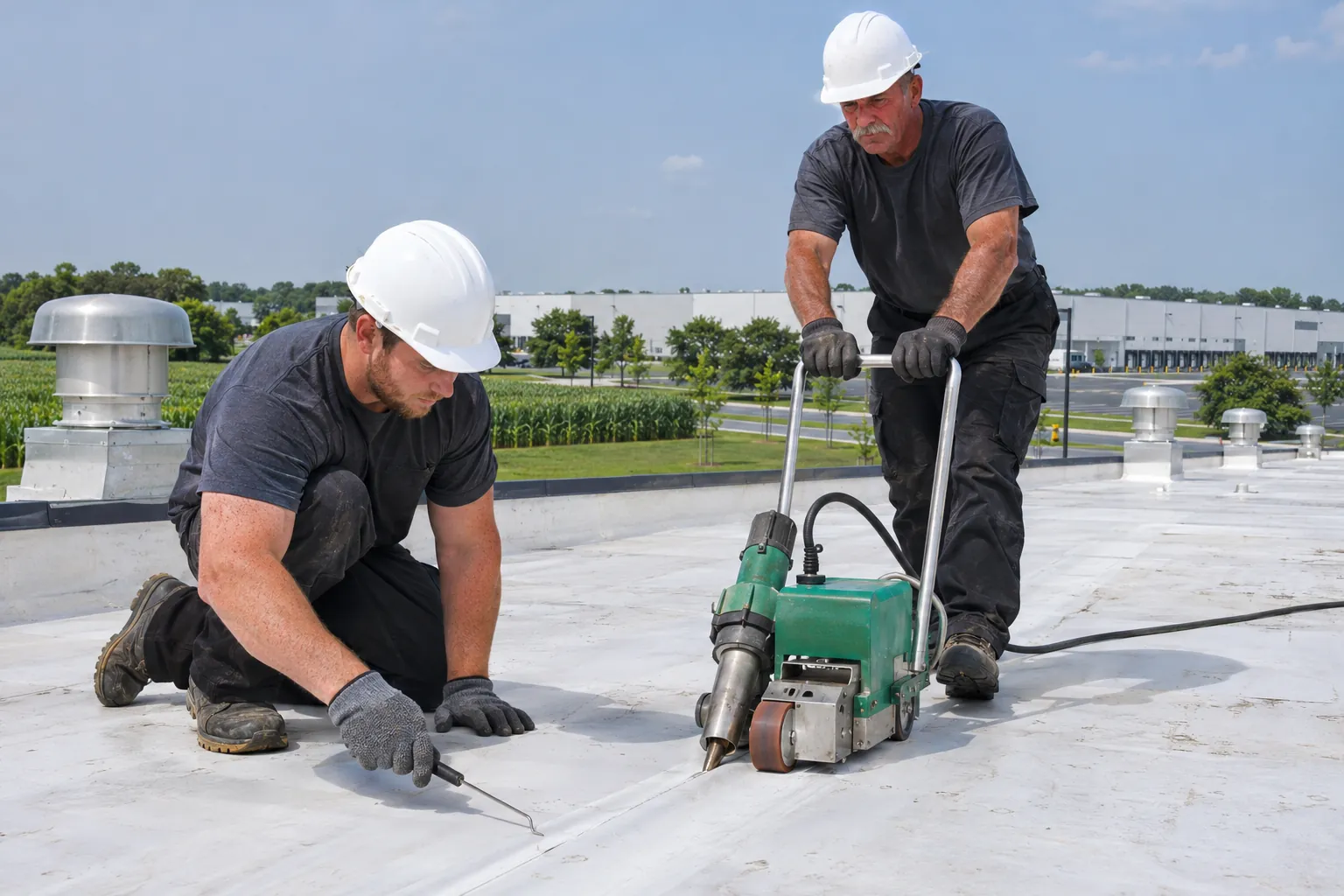
Welded white sheets suit long flex buildings and keep upper storage cooler in summer.
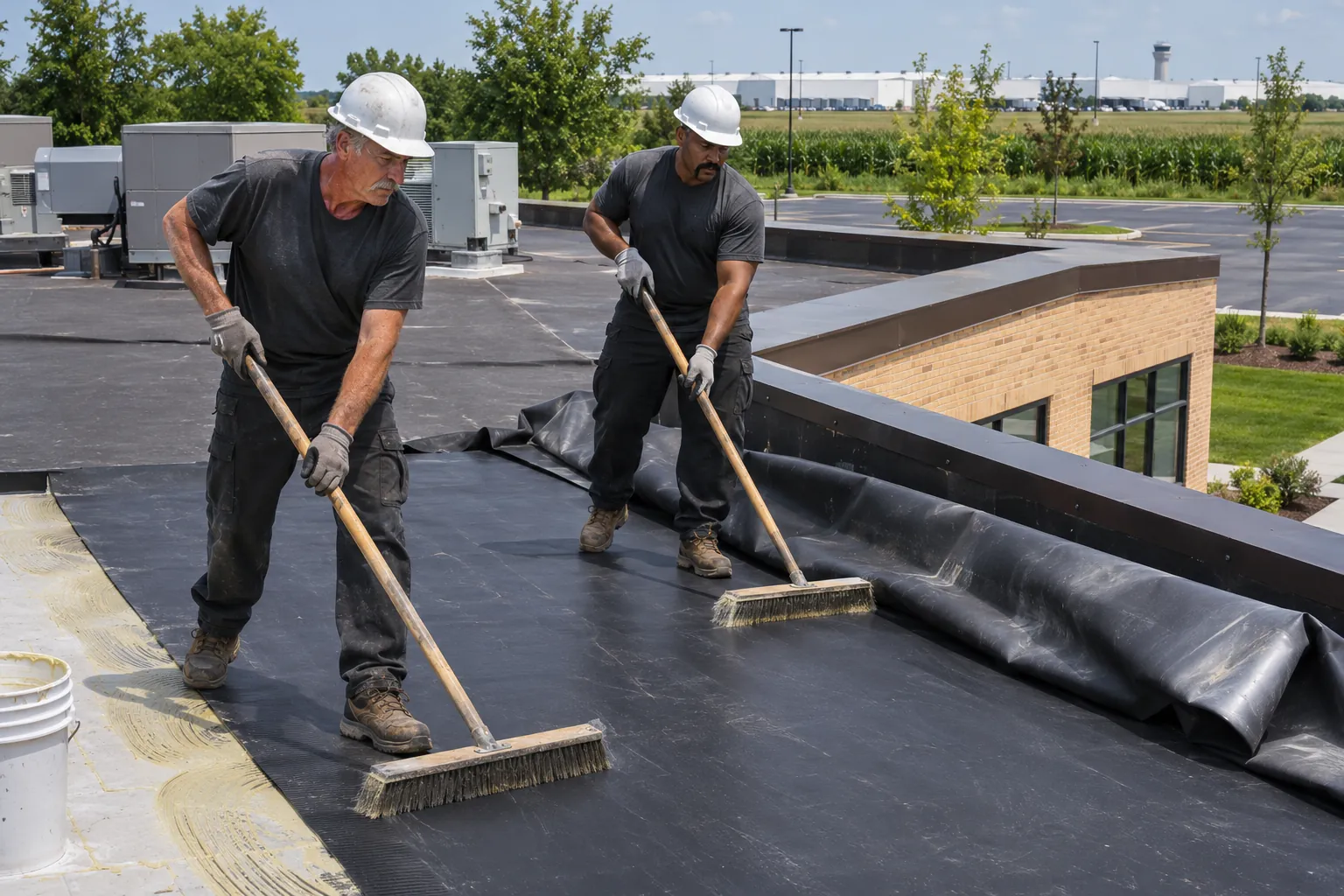
Rubber flexes with older buildings that have many walls and steps.
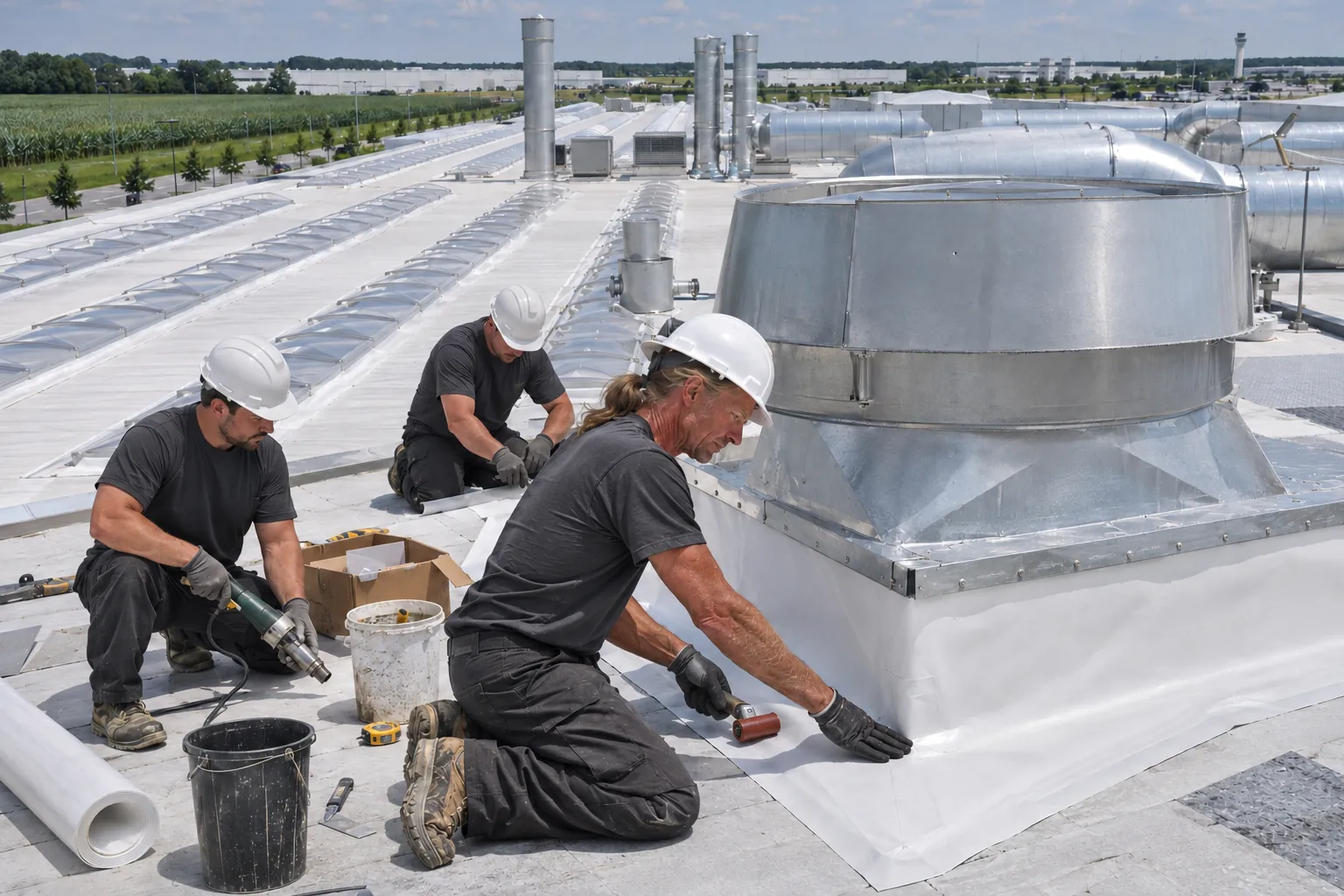
Light manufacturing tenants with exhaust fans need matching membrane and pads.
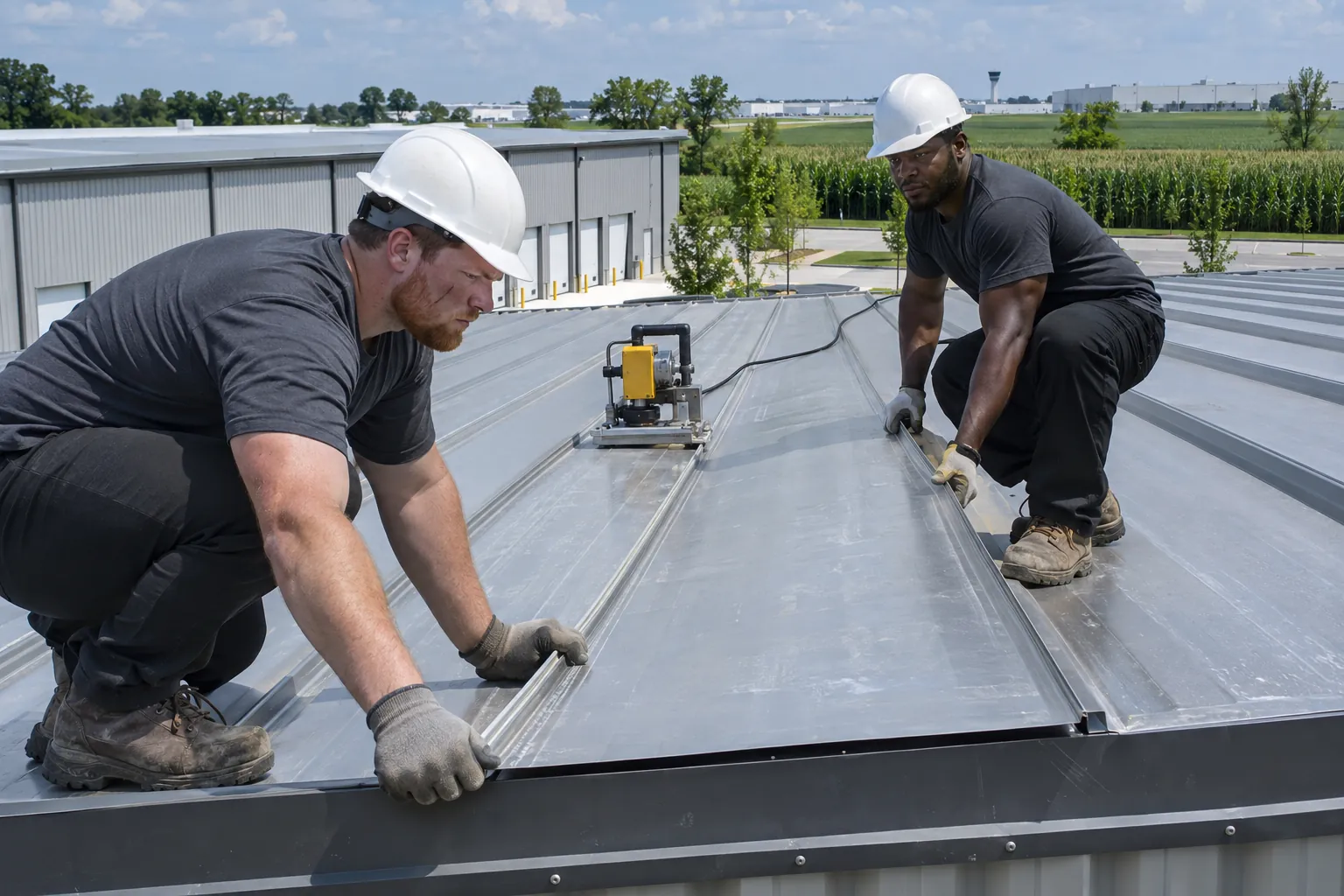
Metal panels fit shop buildings and flat roofs converted to slope.
Tell us the suite number and where the water lands, and we will find the lap or curb above it.
Call UsSend the address and the number of bays, and we will plan the roof around your tenants.
Get A Free EstimateWork on an occupied building follows the tenant schedule as closely as the forecast.
Each tenant bay is walked and cored on its own, since roofs over multi-tenant buildings rarely age evenly.
The sequence and quiet hours are set with the property manager, and tenants get notice before their bay opens.
A bay is opened, insulated, and covered with new membrane, then sealed before the crew moves next door.
Every curb in that bay gets new flashing before the section is signed off.
We also take commercial roof work in the towns below. Outside them? Call us or send us a message.
Plant roofs replaced in sections over production.
Mooresville commercial roofing →Metal or membrane matched to each roof's slope.
Greencastle commercial roofing →What Brownsburg owners and property managers ask about phased roof work.
We do: TPO, EPDM, and metal on commercial and light-industrial buildings in town. Each job opens with an inspection and moisture check to settle tear-off or recover, then runs around business hours with every section watertight by the end of the work window.
Tenants usually stay open the whole time. Noisy tear-off over offices runs early, lifts and dumpsters set down away from customer doors and loading bays, and only one bay is open at once. That bay gets insulation, membrane, and curb flashing, and it is sealed before the crew leaves it for the night.
Cores decide it. A recover with a cover board works over one dry layer on a solid deck and saves tear-off noise, debris, and dumpster trips past tenant doors. Wet insulation, a rusted deck, or the layer limit already reached mean the roof comes off to the deck before new insulation goes down.
Light industrial tenants add exhaust fans, make-up air units, and the occasional process vent. The plan maps each curb, raises the low ones, picks a membrane that stands up to what is vented, and lays walkway pads along the routes technicians walk, so the new roof lasts under daily service traffic.
Property managers get a written bay schedule, and each tenant hears which day their space sits under open roof and when noisy work runs. Interior covers go over sensitive stock and electronics when a bay above opens, and the manager hears again once that bay is sealed.
Call or send the address, and we will core each bay and plan the work around your tenants.